
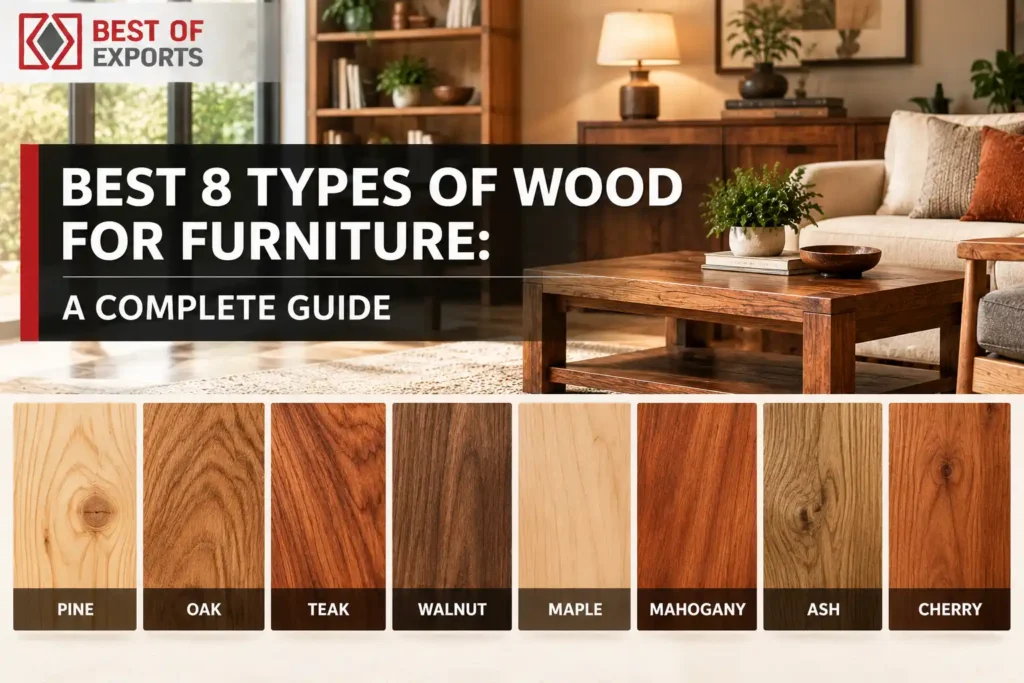
Selecting the right wood is important when we want to buy furniture for our home because the type of wood affects its strength, appearance, durability, maintenance and price. Some wood types are best for heavy furniture like beds and wardrobes while others work well for decorative pieces, cabinets and everyday household items.
Understanding the different types of wood for furniture can help you make a better decision based on your budget, home design and requirements. In this comprehensive and detailed guide, we will explore all the major wood options, their benefits and limitations and how to choose the right one for your home.
1. Teak Wood
Teak is one of the most popular wood choices among types of wood for furniture to make high quality furniture. It is very famous for its strength, durability and resistance to moisture, insects and decay. Its golden brown colour and attractive grain pattern give the furniture a rich and elegant look.
It is suitable for making beds, dining tables, wardrobes, doors and outdoor furniture. It performs well in changing weather conditions if maintained properly which makes it a practical option for long term use.
However, teak is usually more expensive than many other woods. Its high price can make it unsuitable for people who are on a limited budget. If you want furniture that lasts for decades and are willing to invest more initially then teak can be a worthy choice.
Also Read: Is Teak Wood Expensive? A Complete Price Guide for 2026
2. Sheesham Wood
Sheesham is also known as Indian rosewood. It is widely used for furniture in Indian homes. It has a rich brown colour, unique grain patterns and it also has good natural strength. Its attractive look makes it suitable for a lot of traditional and modern interiors.
It is commonly used to make beds, dining tables, coffee tables, cabinets, bookshelves and wooden chairs. When we compare the types of wood for furniture available in India, sheesham is worth considering because it combines a premium look with practical everyday use. However, the quality of the finished furniture depends on proper seasoning, construction and finishing. Poorly dried wood may warp or develop cracks over time.
3. Sal Wood
Sal wood is a strong hardwood which is loved for its density, toughness and ability to handle heavy use. These qualities make it a suitable option for furniture and certain structural applications among the types of wood for furniture.
It can be used to construct sturdy beds, heavy tables, frames and other furniture that needs to support considerable weight. Its strength is particularly useful when durability matters more than a decorative finish.
However, sal wood can be heavy and difficult to work with compared with some other woods. Its look may also be less decorative than teak or sheesham which depends on the finish. Proper seasoning is very important to reduce the risk of cracking and warping.
Before buying sal furniture, you should check the quality of the wood and the craftsmanship. A well made piece can provide reliable service for many years.
Also Read: Pine Wood vs Teak Wood: Which Is Better for Furniture?
4. Mango Wood
Mango wood has become a popular choice for many furniture manufacturers. It comes from mango trees that are no longer productive for harvesting fruits. Mango wood often comes with varied grain patterns and natural colour differences that give each piece a unique look among the types of wood for furniture.
It is commonly used to make coffee tables, side tables, cabinets, bookshelves, dining furniture and decorative pieces. It also suits rustic, modern and industrial style interiors. Mango wood can be a good option for people who want an attractive look without always paying the higher price associated with premium hardwoods.
It is generally less expensive than teak, although the price of the furniture may differ depending on the design and quality. Mango wood is not as naturally resistant to moisture as teak. It needs proper finishing and should be kept away from dampness. Regular cleaning and sensible care can help preserve its look to last many years.
5. Pine Wood
Pine is a softwood that is widely used in furniture manufacturing as it is relatively lightweight, easy to cut and shape, and often more affordable than other hardwoods. Its light colour and simple grain designs makes it a good option for making furniture that has a clean and natural look.
It is commonly used for making beds, shelves, desks, cabinets, children’s furniture and basic storage units. It can also be painted or stained to match different interior styles and themes. One of its main benefits is affordability.
Pine furniture can be a good option among the types of wood for furniture for rented homes, guest rooms or spaces where you want practical furniture without spending too much on furniture. However, pine is softer than most hardwoods so it can develop dents and scratches more easily. It may not be the best choice for furniture that receives heavy daily use unless it is well constructed and properly finished.
6. Oak Wood
Oak is a durable hardwood that comes with a very distinct grain pattern, strength and timeless appearance. Oak is used to make dining tables, chairs, wardrobes, cabinets, bed frames and bookshelves. Its strong structure makes it suitable for pieces that need to handle regular use among all other types of wood for furniture.
It is also available in a lot of varieties like white, red or black oak. Their colours, grain patterns and properties vary so the best option depends on the intended use and desired look.
Oak is an expensive wood, particularly when it is imported. It can also be heavier than some alternatives. Nevertheless, it is worth considering if you prefer a strong, natural wood with a classic and elegant look.
Also Read: Advantages and Disadvantages of Sheesham Wood: Complete Guide
7. Walnut Wood
Walnut is a premium hardwood which is loved for its rich brown shades, attractive grain patterns and sophisticated look. It is used to make high end dining tables, desks, cabinets, bed frames and decorative furniture.
Walnut works especially well in places where the natural beauty of the wood is intended to stand out. Walnut can be a good option for the people who prioritise appearance and craftsmanship when exploring the types of wood for furniture. Its darker colour can complement neutral walls, light fabrics and many interior themes.
The main disadvantage is its price. Walnut is generally more expensive than many commonly available woods. If your budget allows, however, it can look elegant without requiring any other elaborate decoration.
8. Engineered Wood
Engineered wood is manufactured by combining things like wood fibres, particles, veneers or layers using adhesives and other processes. Common examples are plywood, medium density fibreboard (MDF) and particleboard. These materials have different properties so they should not be treated as interchangeable.
Plywood is made from layers of wood veneer and it is often used for making cabinets, shelves and furniture frames. MDF has a smooth surface that works well for painted furniture and decorative panels. Particleboard is frequently used in budget-friendly furniture, including flat-pack wardrobes and desks.
Engineered wood is usually more affordable than solid wood and can provide a consistent finish. It is especially useful for modular kitchens, storage units and contemporary furniture designs. However, its strength and moisture resistance depend on the specific material, grade and construction.
Some products may swell if exposed to water while lower quality boards may not support heavy loads as effectively as solid hardwood. If you are comparing the types of wood for furniture for a modern home, engineered wood can be a practical option for budget projects and specific applications. Check the board quality, edge finishing, hardware and moisture resistance before buying.
Solid Wood vs Engineered Wood
Solid wood is made from natural timber while engineered wood is manufactured from wood based layers, fibres or particles. Both can be useful but they serve different needs.
Solid wood is often preferred for its natural grain, repairability and longevity. It can last for decades depending on the type and construction. However, it can cost more and may expand or contract as temperature and humidity change.
Engineered wood is more budget friendly and available in a wide range of finishes. It is commonly used for modular furniture and fitted storage. Its lifespan depends on the board quality, exposure to moisture and how well the furniture is assembled.
None of these options is automatically best for every situation. A solid wood dining table may be a sensible long term investment while an engineered wood wardrobe may provide practical storage at a lower price. Understanding the differences between the types of wood for furniture will help you choose the right material for each room.
Conclusion
Selecting furniture becomes easier when you understand the pros and cons of different wood materials. Teak, sheesham, sal, mango, pine, oak and walnut each offer different combinations of strength, appearance, price and maintenance requirements. Engineered wood is another useful option for modern homes and budget conscious buyers.
The right choice depends on your needs, the furniture’s intended use and the conditions in your home. Compare quality, construction, finish and price before buying any furniture item. You can choose pieces that suit your home and provide lasting value by understanding the types of wood for furniture and their benefits.
