
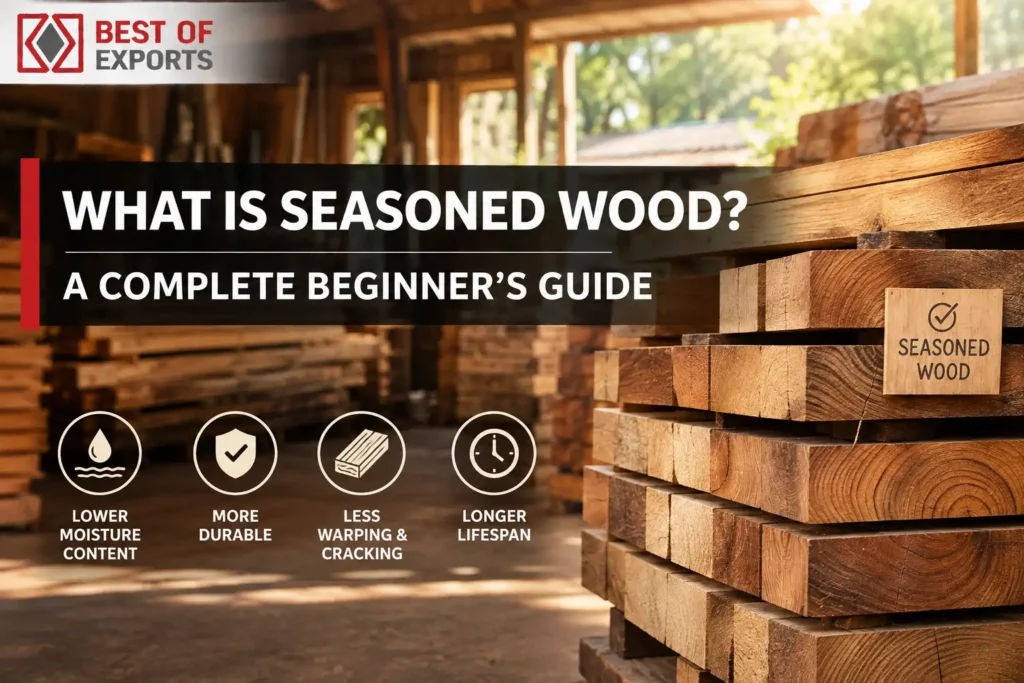
Wood is used to make furniture, doors, windows, flooring and many other household and other products. But freshly cut wood is not always ready to use because it contains natural moisture that must be reduced before the wood can be used for most woodworking projects. This process is called the seasoning of the wood.
If you are new to woodworking or planning to buy wooden furniture, understanding what is seasoned wood can help you make better decisions. The seasoning improves the stability of wood and minimises the risk of problems like cracking, warping and shrinking. This detailed and comprehensive guide explains how the seasoning process works, its different methods, its benefits and how to identify properly seasoned wood.
What Is Seasoned Wood?
Seasoned wood is the timber that has been dried to minimise its moisture content to a suitable level for its desired use. Freshly cut wood contains a great amount of moisture in it which makes it hard to work when it is freshly cut.
As wood dries, it gradually loses moisture and if this happens in a controlled manner, the timber becomes more stable and easier to use for furniture making, construction and other applications.
When learning what is seasoned wood, it is important to understand that seasoning does not mean removing every trace of moisture because wood naturally responds to the temperature and humidity of its surroundings. The goal is to bring its moisture content to a suitable level for the environment where it will be used.
The best moisture content depends on the type of the wood, the intended application and local climatic conditions. Furniture that is used indoors may need a different moisture level from timber that is going to be used outdoors.
Also Read: Most Common Types of Wood and Their Uses
Why Does Wood Need Seasoning?
Freshly cut timber may look strong but its high moisture content can cause problems when it is used without proper drying. As the wood loses moisture, it shrinks. If the drying process is uneven or too fast, internal stresses can develop and damage the timber.
Seasoning helps reduce these risks and makes the wood more suitable for practical use. Here are some important reasons why seasoning of wood matters:
- Improves stability: Properly dried wood is less likely to shrink significantly after being made into furniture.
- Reduces cracking and warping: Controlled drying helps minimise the defects caused by uneven moisture loss.
- Improves workability: Seasoned timber is generally easier to cut, shape, join and finish.
- Supports better finishing: Paints, stains and other finishes can perform well when the wood has an appropriate moisture content.
- Reduces excess weight: Drying makes the timber lighter and easier to transport and handle.
- Helps protect the material: Lower moisture levels can make conditions less favourable for certain fungi, although seasoning does not make wood completely immune to mould, decay or insects.
Understanding what is seasoned wood, particularly useful when purchasing wooden beds, tables, wardrobes or doors because moisture related changes can affect how these products fit and perform over time.
Different Methods of Wood Seasoning
There are two main methods of seasoning wood: natural seasoning and artificial seasoning. Both work to lower the moisture.
1. Air Seasoning
Air seasoning is a natural method in which the timber is stacked in a well ventilated area and allowed to dry through exposure to the air. Wooden boards are usually separated by small spacers so that air can circulate around and through their surfaces.
The timber must be protected from direct rain, excessive sunlight and ground moisture. Good airflow is very important because trapped moisture can slow drying and can cause fungal growth. One major advantage of air seasoning is its low cost. It does not need to have specialised drying equipment which makes it suitable for timber yards and small woodworking businesses.
However, this process can take many weeks or months and thicker pieces may take considerably longer. The drying rate also depends on the type of the wood, thickness of the logs or boards, weather and humidity.
2. Kiln Seasoning
In order to understand what is seasoned wood, another method is kiln seasoning. It uses a specialised chamber in which temperature, humidity and airflow can be controlled and managed. Timber is placed inside the kiln and the drying conditions are adjusted to remove moisture at an appropriate rate.
This method is generally faster than air seasoning and allows more consistent control over the final moisture content. It is commonly used by commercial timber suppliers and large furniture manufacturers.
Kiln seasoning can also help manage certain wood defects when the process is properly designed for the type and thickness of the timber. However, equipment and operating costs are higher compared to the natural drying.
When deciding what is seasoned wood for a particular project, remember that both air seasoned and kiln seasoned timber can be suitable. The important factors are the final moisture content, drying quality and intended application.
Also Read: Top 10 Advantages of Teak Wood Furniture
How Is Seasoned Wood Different from Green Wood?
Green wood is freshly cut or has not yet lost enough moisture to reach a suitable level to be used for any woodworking project. Seasoned wood has undergone drying to reduce that moisture. The differences affect how the timber behaves during storage, construction and furniture making.
Green wood is heavier because it contains more water. It may be easier to cut in some situations but it can shrink as it dries, which can lead to loose joints, gaps, cracks or changes in shape after a product has been made.
When understanding what is seasoned wood is generally more stable and easier to use for finished furniture. Wood can still absorb or release moisture when environmental conditions change overtime.
For this reason, timber should be stored correctly before use. Even well seasoned wood can develop problems if it is exposed to rain, damp floors or sudden changes in humidity.
How Can You Identify Properly Seasoned Wood?
You cannot always identify properly seasoned wood simply by looking at it. Some visual signs can offer clues but measuring moisture content is more reliable. Consider these checks before buying timber:
1. Use a moisture meter: A moisture meter measures the moisture content of wood. It is one of the most practical ways to check if the timber is suitable for your particular project.
2. Check for visible defects: Look for deep cracks, excessive warping, twisted boards and other signs of poor drying. Some small checks may occur naturally so assess the overall quality rather than relying on one sign.
3. Ask the supplier: A reliable seller should be able to explain how the timber was dried and whether it is suitable for indoor furniture, construction or outdoor use.
4. Inspect storage conditions: Wood stored in a dry, ventilated environment is less likely to absorb unwanted moisture than timber left exposed to rain or damp ground.
5. Consider the intended use: The right moisture content depends on the application and local conditions. Wood that is going to be used for indoor furniture needs to be suited to the humidity of the room where it will be used.
How Long Does Wood Seasoning Take?
There is no single drying time that applies to every type of wood. The duration depends on a lot of factors like the species, thickness, initial moisture content, weather conditions and seasoning method.
Air seasoning can take months or longer, especially for thick hardwood boards and logs. Thin boards and certain softwoods may dry more quickly. Kiln seasoning can shorten the time but the drying schedule must be appropriate for the timber.
Trying to dry the wood too quickly can cause cracks on its surface, internal stresses and other defects. A slower, controlled process is often more effective than rushing the timber to a lower moisture level.
Also Read: Mango Wood vs Sheesham Wood: Which Is Better for Furniture?
Common Uses of Seasoned Wood
When we learn to understand what is seasoned wood, knowing that a wide variety of timber is used because it is generally more stable than freshly cut wood. Its applications include:
- Furniture: Beds, dining tables, chairs, wardrobes and cabinets benefit from timber with a suitable moisture content.
- Doors and windows: Properly dried wood helps lower the risk of excessive movement that can affect fitting and operation.
- Flooring: Seasoned timber is important for reducing unwanted gaps, cupping and other moisture related problems.
- Construction: Timber used in suitable structural applications must meet the relevant moisture and quality requirements.
- Decorative products: Frames, shelves, wooden panels and other crafted items benefit from stable material.
The exact requirements vary by application. Structural timber, for example, may need to meet specific building standards in addition to having an appropriate moisture content.
Conclusion
Wood seasoning is an important step in preparing timber for furniture making, construction and other woodworking applications. Seasoning helps improve thet stability, workability and the overall performance of wooden products.
If you have been wondering what is seasoned wood, the simplest explanation is that it is timber dried to a moisture level and is suitable for its desired use. Air seasoning and kiln seasoning are the two main methods and each has its own benefits.
You should always check its condition, ask about the drying process and consider where the finished product will be used before buying wood. Selecting properly seasoned wood can help you minimise moisture related problems and support furniture that remains functional and attractive for years to come.
