
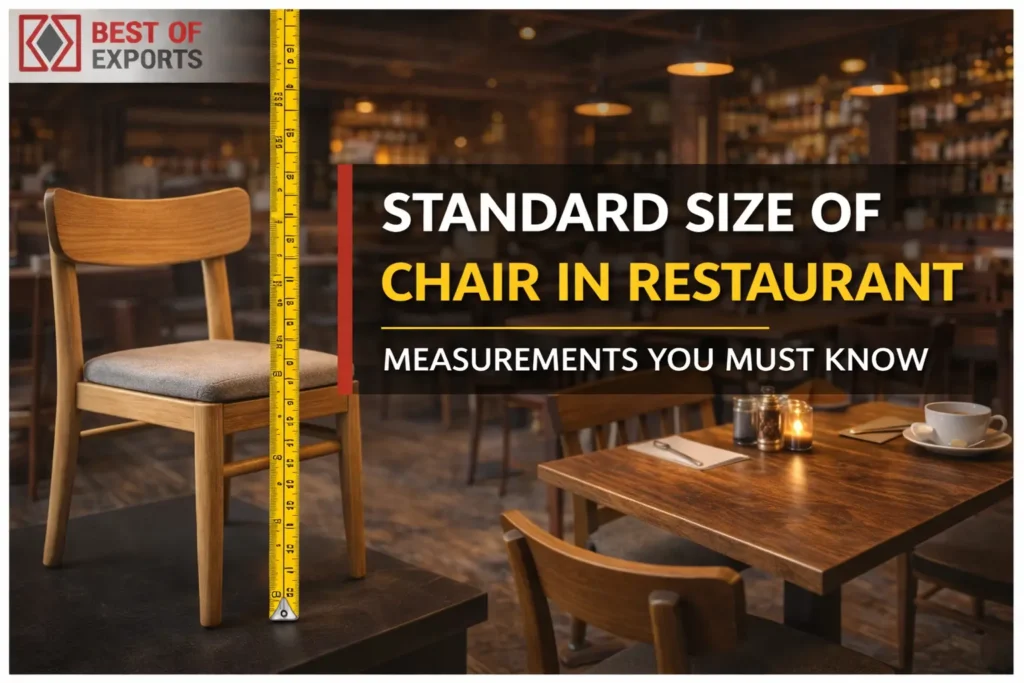
Setting up a restaurant is exciting but it can also feel confusing. There are many small details to think about. From the menu to the lighting and music, every choice affects how customers feel. One of the most important things, which many people ignore, is furniture. A chair is not just for sitting. It affects comfort, mood and how well you use your space.
Knowing the standard size of chair in restaurant layouts helps you build a dining space that feels comfortable and works smoothly. This comprehensive and detailed guide explains everything you need to know, from basic sizes to different chair types so you can choose the best option for your restaurant.
Why the Size of Chair in Restaurant Seating is So Important
Selecting the right furniture is not only about looks. The size of your chairs affects customer comfort, easy movement and how many people you can seat. If you choose the wrong size, tables can feel cramped, customers can feel uncomfortable and space can be wasted. The right size of chair in restaurant seating creates a good balance between comfort and smooth daily work.
1. Enhancing Customer Comfort
The main job of a chair is to keep guests comfortable. If customers are not comfortable, they may not enjoy their food, may leave early and may not come back. The height of the seat, how deep it is, and how strong the back support is all matter. A chair that is too low makes eating difficult. A chair that is too high makes feet hang in the air. The correct size of chair in restaurant seating helps guests relax and enjoy their time.
2. Maximising Seating Capacity
Every bit of space in your restaurant can bring money. The size of your chairs decides how many tables and customers you can fit in one area. Wide chairs feel luxurious but reduce the total number of seats. Small chairs help you seat more people. Choosing the right size of chair in restaurant layout helps you plan your space wisely.
3. Ensuring Accessibility and Flow
Customers and staff must be able to move easily around the restaurant. There must be enough space between tables and chairs. The size of your chairs affects how wide the walkways are. You must also follow accessibility rules so wheelchairs can move easily. Enough space helps staff walk without hitting chairs or guests. The correct size of chair in restaurant furniture keeps everything safe and smooth.
Also Read: How to Start Restaurant Business in India – A Step-By-Step Guide
Standard Restaurant Chair Measurements: The Basics
There is no single exact size that works for every restaurant, but there are common standard sizes that most places follow. These sizes match standard table heights which are usually 74 cm to 76 cm high.
Standard Seat Height
The most critical measurement is the seat height. This is the distance from the floor to the top of the seat.
- Standard Range: 45 cm to 50 cm (18 to 20 inches).
- Why it Matters: This height allows for about 25 cm to 30 cm (10 to 12 inches) of clearance between the chair seat and the underside of the table. This gap provides ample legroom for the average adult which makes it comfortable to sit and dine. The proper size of chair in restaurant seat height is non-negotiable for diner comfort.
Standard Seat Width and Depth
Seat width and depth determine how much space a person has while seated.
- Standard Width: 40 cm to 50 cm (16 to 20 inches). A wider seat offers more comfort but a standard width of around 45 cm is common to balance comfort and space.
- Standard Depth: 40 cm to 45 cm (16 to 18 inches). This depth should be sufficient to support the thighs without pressing into the back of the knees. The best size of chair in restaurant seating will accommodate a wide range of body types.
Standard Overall Chair Height
The overall height, measured from the floor to the top of the chair’s backrest, influences the restaurant’s visual landscape.
- Standard Range: 80 cm to 110 cm (32 to 43 inches).
- Low-Back Chairs (80 to 90 cm): Create an open, airy feel. They don’t obstruct views across the restaurant, making the space feel larger.
- High-Back Chairs (90 to 110 cm): Can add a sense of drama, elegance or privacy. They are often used in fine dining establishments or to create distinct zones within a larger space. When considering the overall size of chair in restaurant layouts, think about the visual impact.
Also Read: Complete Restaurant Kitchen Equipment List for 2026
Exploring Different Types of Restaurant Chairs and Their Dimensions
The type of dining experience you want to offer affects which chairs you should use. Here are common types and their usual sizes.
1. Standard Dining Chairs
These chairs are used in most family and casual restaurants. They usually do not have arms so they can fit neatly under tables.
- Seat Height: 45 to 48 cm
- Seat Width/Depth: 40 to 45 cm
- Best For: High-turnover environments where space efficiency is a priority. The armless design makes them a versatile size of chair in restaurant floor plans.
2. Dining Chairs with Arms (Armchairs)
These chairs feel more comfortable and look more formal. They are often used in fine dining or placed at the ends of tables.
- Seat Height: 45 to 50 cm
- Overall Width: 55 to 65 cm (including arms)
- Important Note: You must ensure the arms can slide under the table. Measure the distance from the floor to the tabletop apron. If the arms are too high, the chair cannot be pushed in which takes up valuable floor space. The arm height is a crucial aspect of the size of chair in restaurant armchairs.
3. Bar Stools and Counter Stools
For bars, high-top tables or counter seating, stools are the go-to option. It is vital to match the stool height to the counter height.
- Spacing: Allow at least 60 cm of counter space per stool to provide enough elbow room. Choosing the wrong size of chair in restaurant bar areas can lead to a very uncomfortable experience.
4. Booths and Banquettes
Booths offer a sense of privacy and comfort that many diners love. They are a great way to maximise seating along walls.
- Seat Height: Typically around 45 cm.
- Seat Depth: Can be slightly deeper, around 45 to 55 cm.
- Length: A two-person booth is typically 120 cm (48 inches) long. A four-person booth is usually 180 cm (72 inches) long.
- Table Clearance: Ensure the table is positioned to allow easy entry and exit. The synergy between table size and the size of chair in restaurant booth seating is key.
5. Lounge Chairs and Sofas
For a lounge area, cafe or waiting area, comfort is the top priority. These chairs have more generous dimensions.
- Seat Height: Lower, often 38 to 45 cm.
- Seat Depth and Width: Much larger, often 55 cm or more.
- Purpose: Designed for relaxation, not active dining. The required size of chair in restaurant lounge areas is about creating a comfortable and relaxed atmosphere.
Also Read: Is Restaurant Business Profitable in India? Complete Guide 2026
How to Plan Your Restaurant Layout: Spacing is Everything
After choosing the right chair sizes, the next step is planning how to place them. Correct spacing is very important for comfort and safety.
Spacing Between Tables
The distance between tables determines the level of intimacy and ease of movement.
- Minimum for Service Aisles: 45 to 60 cm (18 to 24 inches) between the corners of square tables set at an angle or between the backs of chairs when pulled out. This is a tight fit and suitable for quick-service restaurants.
- Comfortable Dining: 75 cm (30 inches) between tables allows for more personal space and easier movement for staff.
- Main Traffic Aisles: These should be at least 90 to 120 cm (36 to 48 inches) wide to accommodate staff carrying trays and to comply with accessibility standards for wheelchairs. Your chosen size of chair in restaurant will directly impact these measurements.
Space Per Person
A general rule of thumb is to allocate a certain amount of square footage per diner which varies by restaurant type.
- Fine Dining: 1.8 to 2 square metres (18 to 20 sq ft) per person.
- Full-Service Dining: 1.2 to 1.5 square metres (12 to 15 sq ft) per person.
- Fast Casual/Counter Service: 1 to 1.2 square metres (11 to 12 sq ft) per person.
- Fast Food: 0.8-1 square metre (9 to 11 sq ft) per person.
This allocation accounts for dining space, aisles and service stations. The size of chair in restaurant furniture you select is a major variable in this calculation.
Customisation and Special Considerations
Your restaurant might have unique needs while standard dimensions are a great guide.
Considering Your Target Audience
If young adults are your main customers then modern smaller chairs may work well. The best size of chair in restaurant seating is the one that fits your customer type.
The Impact of Material and Design
The material of the chair can also affect its perceived size and comfort. A solid wood chair might have the same dimensions as a metal one but feel more substantial. Upholstered chairs offer more comfort but can be bulkier. The design itself plays a role because a chair with a minimalist frame will occupy less visual space than one with a heavy and ornate design. The right size of chair in restaurant layouts must also consider material choices.
Outdoor Seating
For outdoor areas then choose chairs made from weather-resistant materials such as treated wood, aluminium or resin. Many outdoor chairs can be stacked to save space. These chairs may be slightly smaller to help manage seasonal seating. The correct size of chair in restaurant outdoor areas should be strong, practical and easy to handle.
Also Read: Top 20 Must-Have Items in Your Restaurant Crockery List
Conclusion: The Foundation of a Great Dining Experience
Choosing the right furniture is one of the most important steps when designing a restaurant. This decision is not only about looks because it also affects comfort and how smoothly the restaurant works. When you understand the standard size of chair in restaurant measurements, you can create a space that feels welcoming, works efficiently and allows your food to stand out.
Every centimetre matters, right from the height of the seat that matches your tables to the width of the chair that shapes your floor layout. Take proper measurements of your space, think about your restaurant theme and choose chairs that will support your business and keep your guests comfortable for many years.
Are you ready to set up your restaurant furniture? Our expert team can help you choose the right furniture that matches your space, style and budget. Contact us today for a free consultation and let us help you create a dining experience your customers will enjoy and remember.
Frequently Asked Questions (FAQ)
1. What is the most important measurement for a restaurant dining chair?
The most important measurement is the seat height. It should be between 45 cm and 50 cm (18 to 20 inches) to work with a standard dining table height of 74 to 76 cm. This ensures there is about 25 to 30 cm of clearance for a diner’s legs which is essential for comfort while eating.
2. How much space should I leave between tables in my restaurant?
The spacing depends on your restaurant type. For main walkways, have at least 90 to 120 cm for accessibility and for staff to move easily. Between occupied chairs from back-to-back tables, a minimum of 60 cm is needed for service. For a more spacious and upscale feel, aim for 75 cm or more between the edges of the tables.
3. Should I choose chairs with or without arms?
This depends on your concept and space. Armless chairs are more space-efficient as they can be pushed fully under the table and allow for more seating. Chairs with arms offer greater comfort and a more luxurious feel. These are best for fine dining. If you choose armchairs then make sure the arm height is low enough to slide under your tables to save space when not in use. This factor heavily influences the effective size of chair in restaurant planning.
4. How do I choose the right height for bar stools?
The stool height is determined by your counter or bar height. For a standard 90-92 cm kitchen-height counter, choose a counter stool with a seat height of 60-66 cm. For a taller 102-107 cm commercial bar, you will need a bar stool with a seat height of 71-76 cm. Always leave 25-30 cm of clearance between the seat and the countertop.
5. How does the chair’s back height affect my restaurant’s ambiance?
The back height has a significant visual impact. Low-back chairs (80-90 cm) create an open, casual, and social atmosphere, making the space feel larger. High-back chairs (90 cm and above) can add drama, formality, and a sense of privacy. They are often used in fine dining or to create intimate sections within a large dining room. The perceived size of chair in restaurant interiors is heavily influenced by its profile.
6. How many chairs can I fit at a standard rectangular table?
For comfortable seating, allow about 60 cm (24 inches) of table length per person. So, a 120 cm (48-inch) table can comfortably seat two people on each side (four total). A 180 cm (72-inch) table can seat three on each side (six total). You can often add one chair at each end if you use armless chairs.
7. What material is best for restaurant chairs?
The best material depends on your brand, budget and how the furniture will be used. Wood is a classic option that is strong and flexible in style which works well for rustic or elegant spaces. Metal gives a modern and industrial look and is highly durable while also being lightweight and cost effective. Upholstered chairs provide the highest level of comfort but need regular cleaning and more care to maintain. Plastic or resin furniture is affordable, easy to move and ideal for casual dining areas or outdoor seating. The material you choose will directly affect how long the furniture lasts and how much maintenance it needs.
