
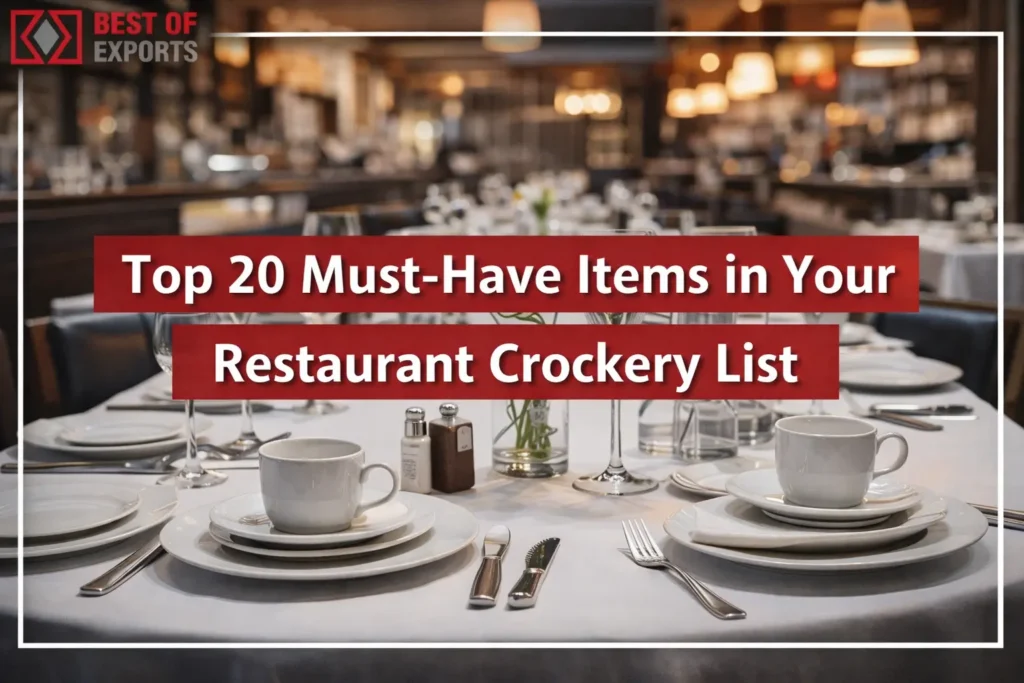
Setting up a new restaurant or improving an old one involves many important choices, right from your menu to your decor. One of the most important parts that affects your dining experience is your crockery. A carefully planned restaurant crockery list does more than serve food. It improves how your brand looks and how your dishes are presented. The right plates, bowls and serving dishes help your food look beautiful and also help your kitchen run smoothly during busy hours.
This comprehensive and detailed guide will help you understand the 20 must have items for your restaurant crockery list. It covers everything from basic plates to special serving items. It will help you make smart choices that match your restaurant theme, food style and budget. No matter if you run a fine dining restaurant, a busy café or a modern bistro, selecting the right crockery is an important step towards success.
Understanding why your restaurant crockery list is important
Before looking at the items, it is important to understand why having a detailed restaurant crockery list matters.
- First impressions: Crockery is one of the first things your guests touch and see. Clean, high quality and good looking dishes create a positive feeling before the food even arrives.
- Brand identity: Your crockery shows your restaurant personality. Rustic earthenware suits farm style restaurants while clean white porcelain is perfect for fine dining.
- Food presentation: The right plate helps your food look more attractive. It works like a background for your chefs creativity by showing colours, textures and arrangement clearly.
- Function and strength: Restaurant crockery must handle heat, washing, frequent use and accidental hits.
Also Read: How to Open a Restaurant in India: A Complete Step-by-Step Guide
Creating the perfect restaurant crockery list: Top 20 items
Making a complete restaurant crockery list needs the right mix of beauty, use and budget. Here are 20 important items every restaurant should have.
- Dinner plates
These are the most used plates in any restaurant. They are mainly used for main courses. Usual sizes are 10 to 11 inches. Select a style that fits your food. Wide rim plates help with elegant food plating while simple plates give more space for bigger portions. - Side plates or quarter plates
These are also called bread and butter plates. They are normally 6 to 8 inches wide. You should always have enough of these for smooth service. - Soup bowls
If you serve dal, creamy soups or clear broth, you need good soup bowls. Deep bowls are good for large portions. Shallow bowls with wide rims are better for stylish presentation. Make sure your restaurant crockery list has options that match your menu. - Pasta bowls
If pasta is common in your menu, special pasta bowls are important. These bowls are large, shallow and have wide rims. They help avoid spills, they are also good for big salads and rice dishes. - Dessert plates and bowls
Dessert is the final part of the meal and should look special. Small plates of about 7 inches work well for cakes and pastries. - Appetiser plates
These plates are slightly bigger than side plates and are usually 8 to 9 inches. - Salad bowls
If your restaurant serves many salads, separate salad bowls are useful. They keep dressings inside and make it easier to eat. A good looking bowl can make even simple salads look more attractive. - Serving platters
These are important for shared meals, buffets and group dining. Your restaurant crockery list should include different shapes and sizes like round, oval and rectangular. - Large serving bowls
These bowls are important for dishes with gravy or sauce like curries, pastas and big salads. They are the heart of shared dining. - Ramekins and soufflé dishes
These small dishes are very useful as you can use them for soufflés, baked eggs, crème brûlée and small sides like chutney and raita. They make your restaurant crockery list more practical. - Gravy boats
Gravy boats are useful for serving sauces separately. They allow customers to add as much or as little sauce as they want. They also make the table look more elegant. - Tea cups and saucers
These are important if you serve hot drinks. You can choose saucers to help avoid spills and hold the spoon and sugar. - Coffee mugs
Coffee mugs are needed for filter coffee, cappuccino and lattes. Select different sizes if needed. Comfortable handles and good heat holding ability are important. - Espresso cups
If you serve espresso then you need special small cups. These cups are made to keep the espresso hot and protect the crema. - Butter dishes
Individual or shared butter dishes add a nice touch to the table. This small item shows attention to detail in your restaurant crockery list. - Salt and pepper shakers
Every table needs salt and pepper shakers. They should be easy to use, clean and match your restaurant style. - Oil and vinegar bottles
They look more professional than using branded bottles. - Noodle bowls or ramen bowls
Deep bowls are a must for serving ramen, pho and other noodle soups if you serve Asian food in your restaurant. These bowls hold broth, noodles and toppings easily. - Special dishes
Some cuisines and dishes require specific plates or bowls to be presented and enjoyed properly. Review your menu in detail so you can choose the right serving ware that suits your dishes and enhances the dining experience. - Bud vases
Bud vases are not for food but they make the table look fresh and pleasant. They complete the table setting and make the dining space feel welcoming.
Also Read: How Many Licenses Required for Restaurant Business? Beginner’s Guide
Choosing the right crockery material
Selecting the right material is very important especially when making your restaurant crockery list.
- Porcelain: It is an elegant choice. It is strong, smooth and looks classic. It does not easily absorb stains and works well in dishwashers and microwaves. It is perfect for busy restaurants.
- Bone china: It is usually used in fine dining restaurants.
- Stoneware: It is heavier and has a natural and handcrafted look. It is strong but can chip more easily than porcelain.
- Earthenware: It has a very rustic and handmade look. It is more porous and less strong so it may not be suitable for very busy kitchens.
- Melamine: This is a strong type of plastic. It is light, almost unbreakable and comes in many designs. It should not be used in microwaves.
How many pieces you should buy
After finalising your restaurant crockery list, you need to plan quantities. Many restaurants use a par level system. This means keeping extra stock for smooth service.
A common guideline is to keep 1.5 to 2 times your total seating capacity for each item. For example, if your restaurant has 100 seats, you should have 150 to 200 dinner plates. This keeps service smooth when some items are in the wash or if any break.
Planning your restaurant crockery list properly helps you avoid shortages during busy hours and reduces stress.
Also Read: Top 10 Restaurant Trends to Watch in 2026
Conclusion
A good restaurant crockery list is a smart investment for your restaurant’s success. It is not only about holding food. It is part of your brand, your food presentation and the overall experience you give to your guests. From large dinner plates to small ramekins, every item helps tell your restaurant’s story. When you carefully select items based on your food, style and daily needs, you create a pleasant and memorable dining experience.
Ready to build the right crockery collection for your restaurant? Our experts can help you create a custom restaurant crockery list that matches your brand and budget. Contact us now and let us help you set the table for success.
Frequently Asked Questions (FAQs)
1. What is the strongest material for restaurant crockery?
Porcelain is one of the strongest and most practical materials for restaurant use. It is made at very high temperatures, which makes it non-porous and resistant to chipping. It can handle heat from dishwashers and kitchen equipment without cracking. Bone china is also strong, but porcelain gives the best balance of strength, good looks and reasonable cost for most restaurants.
2. How do I choose between different plate shapes?
The shape of your plates should match your food style and plating method. For example, round plates are classic and work well for almost all dishes, square or rectangular plates give a modern look and are good for creative plating, coupe plates do not have rims and give you more space for sauces and simple presentation, plates with wide rims are perfect for fine dining because they frame the food and help prevent spills. So, think about how your main dishes will look on each shape before finalising your restaurant crockery list.
3. How often should restaurant crockery be replaced?
How often you need to replace crockery depends on the material, how carefully your staff handle it and how busy your restaurant is. Good quality porcelain usually has a yearly breakage rate of around 10 to 20 percent. It is a good idea to check your inventory every three months to find chips or cracks and reorder items to maintain proper stock levels.
4. Should all the crockery in my restaurant match?
No, it does not have to. A matching set gives a clean and formal look but mixing styles can create a unique and rustic feel. The important thing is to be intentional. You can combine different colours of the same style or mix textures like stoneware bowls with porcelain plates. Make sure all mixed pieces match your restaurant theme.
5. How much budget should I keep for restaurant crockery?
The budget for restaurant crockery depends on the material, brand and quantity. A new restaurant may cost from a few thousand to several thousand depending on the scale of the operation. A good guideline is to spend around 2 to 4 percent of your total startup budget on tableware, which includes crockery, cutlery and glassware. Always compare prices from different suppliers and remember that buying durable items saves money over time.
6. Can I use home crockery in a restaurant?
It is not recommended to use household crockery in a restaurant. Home crockery is not made to handle commercial dishwashers, constant use and accidental hits. Commercial crockery is thicker, stronger and designed with reinforced edges to reduce chipping, which improves safety and durability.
7. How are pasta bowls and soup bowls different?
A soup bowl is usually deeper and narrower to help keep the soup hot. A pasta bowl is wider and more shallow with a broad rim. This design helps spread the pasta, show the sauce nicely and makes it easier to twirl noodles. If both dishes are important to your menu, it is best to include both types in your restaurant crockery list.

Pingback: Top 11 Veg Restaurant Franchise Options in India