
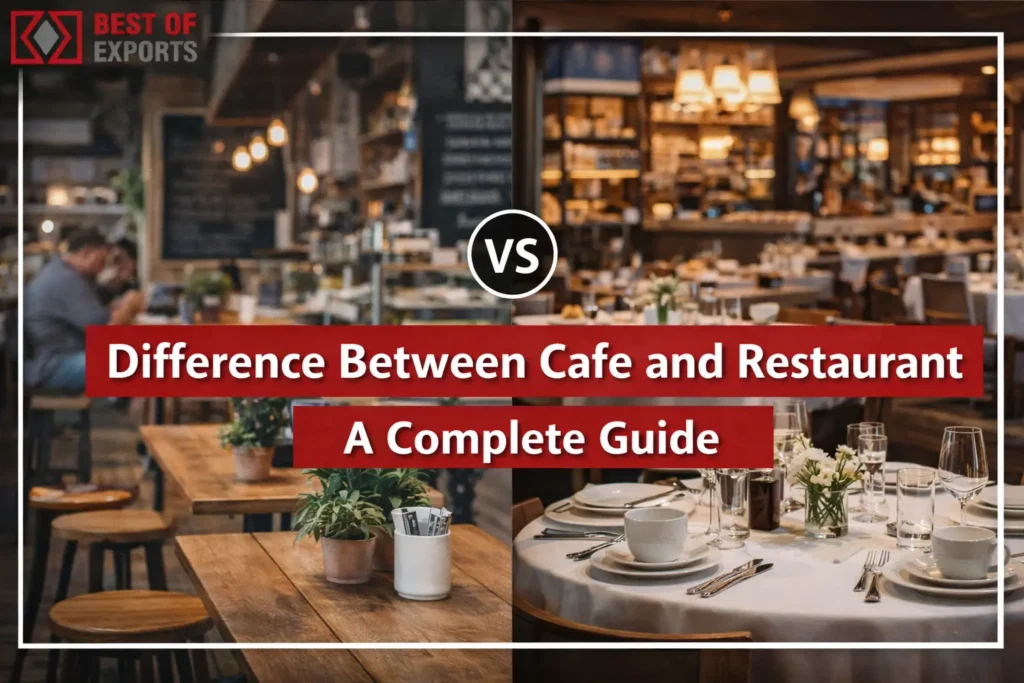
Cafe or restaurant: these two words are often used in the same way which can confuse people when choosing where to eat. Understanding the difference between cafe and restaurant helps you know what to expect and makes it easier to pick the right place for any plan.
The difference is not just about the name. It is about history, culture and the kind of experience the owner wants you to enjoy. For example, you might choose a restaurant for a special dinner, while a café is perfect for a relaxed chat with friends. When you know the difference between cafe and restaurant, you start appreciating what makes each one unique. This comprehensive and detailed guide will explain everything right from the menu, ambience and service so you understand both clearly.
What is a Cafe?
The word “café” comes from French, meaning “coffee.” In the past, cafés were popular meeting places where people talked, shared ideas and enjoyed art or discussions.
Modern cafés usually offer you light meals like sandwiches, pastries, snacks and small plates. The atmosphere is calm, casual and comfortable. People often sit with laptops, read books or chat for long periods. The service is also casual, most cafés ask customers to order and pay at the counter instead of providing full table service.
What is a Restaurant?
Unlike cafés, the main focus in a restaurant is the food. The menu is usually much bigger and includes starters, main dishes and desserts.
Restaurants are built for a full dining experience. The atmosphere can be lively, quiet, formal or casual depending on the type of restaurant. The main difference between cafe and restaurant is that restaurants focus on full meals and complete service, not quick snacks or just beverages.
Also Read: How Many Licenses Required for Restaurant Business? Beginner’s Guide
Key Differences: Cafe vs Restaurant at a Glance
To make it simple, let’s break down the main points. Here is a quick table highlighting the core difference between cafe and restaurant.
| Feature | Cafe | Restaurant |
| Primary Focus | Coffee, beverages and light snacks. | Full meals with multiple courses. |
| Menu | Limited, focuses on pastries, sandwiches and simple dishes. | Extensive, features appetisers, mains and desserts. |
| Atmosphere | Casual, relaxed and social. Often used for work or meetings. | Varies from casual to formal and focused on the dining experience. |
| Service Style | Often counter service, sometimes limited table service. | Primarily full table service with waitstaff. |
| Operating Hours | Typically daytime hours. May close in the early evening. | Open for lunch, dinner and with longer evening hours. |
| Seating | Informal; may include sofas and communal tables. | Formal seating with designated tables for each party. |
| Price Point | Generally more affordable. | Can range from affordable to very expensive. |
Deep Dive into the Differences
Now let’s look more closely at the main points so you can fully understand the difference between cafe and restaurant.
1. The Menu: The Heart of the Matter
A café’s menu is mostly built around drinks. You will always find many kinds of coffee like espresso, cappuccino, latte and americano. They also serve tea, hot chocolate, juices and other simple drinks. Most of these items are quick to prepare or already made. The idea is to offer simple and fast options that do not need a big kitchen to cook.
A restaurant’s menu is very different. It shows the chef’s cooking skills and is divided into courses like starters, main dishes and desserts. Restaurants may focus on a special cuisine like Italian, Chinese, North Indian or South Indian. They serve many dishes that need time consuming preparation and cooking. Food is cooked fresh after the customer orders. Restaurants aim to give you a full and memorable meal. This big menu difference is an important part of the difference between cafe and restaurant.
2. Atmosphere and Ambience
A café has a relaxed and casual feel. The music is soft, the lighting is bright and the décor is cosy. Cafés are places where people can spend time reading, working on laptops, chatting or just relaxing. Seating is usually a mix of small tables, shared benches and comfortable chairs. The space is flexible and friendly.
A restaurant’s atmosphere depends on the type of dining they offer. It can be bright and noisy like a family place or quiet and romantic like a fine-dining restaurant. Everything from lighting, décor, music and even staff uniforms is chosen to match the dining experience. The focus is on the meal and the whole environment supports that. This focus on the eating experience is another key difference between cafe and restaurant.
3. Service Style and Expectations
Service is usually quick and simple in a cafe. Most cafés use counter service where you order and pay at the counter. Then you either collect your food or a staff member brings it to your table. Some cafés offer basic table service, but it is still very informal. Staff interactions are friendly but short. After getting your order, you mostly help yourself. This easy-going service style is an important part of the difference between cafe and restaurant.
In a restaurant, you get full table service. A host seats you at a table. A waiter takes your order, brings your food, checks on you during the meal and handles your bill. The goal is to offer personal attention and a high level of hospitality. This detailed service is a major difference between cafe and restaurant.
4. Operating Hours and Customer Purpose
Cafes mainly operate during the day. They offer morning coffee, light lunches and afternoon snacks. Most cafes open early and close by evening. Their focus is on daily needs such as a quick breakfast, casual lunch or a place to unwind during the day.
Restaurants focus more on lunch and dinner, especially dinner. Evenings and weekends are their busiest times. People visit restaurants for proper dining occasions like family time, date nights, celebrations or business meetings. Restaurants often stay open until late. This difference in timing and purpose clearly shows the difference between cafe and restaurant.
5. The Business Model and Kitchen Setup
A café can run with a small kitchen and fewer staff. Since the food is simple, they do not need many machines or a big team. A barista, a baker and a few helpers are usually enough. This makes starting a café easier and cheaper.
A restaurant needs a much larger kitchen and a structured team. The kitchen team normally includes multiple chefs, all guided by a head chef. The equipment, staff and inventory all require bigger investment. This deeper setup is a major difference between cafe and restaurant.
Also Read: How to Make a Restaurant Menu in 2026: Trends, Tips & Best Practices
The Blurring Lines: When a Cafe Becomes a Restaurant
Today, many places mix elements of both cafés and restaurants which can make the difference between cafe and restaurant a bit confusing. You may see terms like “bistro” or “brasserie.” A bistro is a small and simple restaurant with homely food. A brasserie is larger, louder and serves food all day.
Many cafés now offer bigger and restaurant-style meals, especially during dinner hours. They may call themselves “café and bistro” or “kitchen café.”
On the other hand, some restaurants add café-like features like free Wi-Fi and a relaxed morning menu to attract casual customers.
Which One Should You Choose?
Now that you’re well-versed in the difference between cafe and restaurant, selecting the right spot becomes much easier.
Choose a café when:
- You need a quick coffee or a light snack.
- You want a casual place to read, do your office work or to study.
- You are meeting a friend or colleague for an informal chat.
- You are on a tighter budget.
- You prefer a relaxed and uncomplicated environment.
Choose a restaurant when:
- You want a full, satisfying, multi-course meal.
- You want to celebrate a special occasion.
- You are craving a particular cuisine.
- You want a complete dining experience with attentive service.
- You are planning a formal business lunch or dinner.
Understanding the difference between cafe and restaurant allows you to match your purpose, mood and expectations with the right place. It is not merely a difference in terminology, it is about the experience like what you eat, how you are served and the atmosphere you enjoy. Once you recognise this difference between cafe and restaurant, every outing becomes more intentional and enjoyable.
Also Read: How to Open a Restaurant in India: A Complete Step-by-Step Guide
Conclusion
To sum it up, the difference between cafe and restaurant is shaped by the menu focus, ambience, service style and overall purpose. Even though modern trends are blurring the lines, their core identities remain distinct. Knowing the difference between cafe and restaurant ensures you always pick the perfect place for your needs, occasion and mood.
If you are an aspiring entrepreneur looking to open a café or restaurant in India, understanding this difference between cafe and restaurant is your foundation. Whether your dream is a warm neighbourhood café or a vibrant fine-dining venue, clarity of concept is essential.
Get in touch with our food business consultants today and we will help you with concept development, licensing, menu planning and operational strategy so you can turn your culinary vision into a thriving business.
Frequently Asked Questions (FAQs)
1. Is a cafe cheaper than a restaurant?
Cafes usually serve simple food and drinks that cost less to prepare such as sandwiches, pastries and coffee. Their casual service model also keeps labour costs lower. Restaurants have larger kitchens with more complex dishes and full-service staff which makes their pricing higher. Still this is not a fixed rule and a premium specialty cafe can sometimes cost more than a budget-friendly restaurant.
2. Can I get a full meal at a cafe?
Yes, many modern cafés now serve filling meals, especially those that operate as café-bistros or stay open for dinner. However, the variety is generally more limited than what a restaurant offers. The core difference between cafe and restaurant remains that cafés are not built around multi-course dining.
3. Why do people choose to work in cafes but not in restaurants?
The atmosphere plays a big role. Cafés offer a relaxed setting with cosy seating, free Wi-Fi and a casual service model that lets customers stay for longer periods. In restaurants, tables are meant to be rotated, especially during peak hours and the formal service style makes it impractical for working on laptops. This is why cafés naturally attract students, freelancers and remote workers.
4. What is a “bistro” or “brasserie”?
These are types of food outlets that fall between a cafe and a restaurant. A bistro is usually a small informal French style eatery serving simple hearty meals at moderate prices. A brasserie is larger, more lively and serves food throughout the day from a fixed menu. Both offer more of a dining experience than a typical cafe but are less formal than fine dining restaurants.
5. What is the main difference between a coffee shop and a cafe?
The terms are used as if they are the same but there is a small difference. A coffee shop mainly focuses on coffee including the beans brewing methods and the skill of the barista. Food options are usually limited. In everyday language most people treat a coffee shop and a cafe as the same.
6. Does the legal licensing differ for a cafe and a restaurant in India?
Yes, licensing can differ based on the type and scale of the business. Both cafés and restaurants need an FSSAI license, GST registration and a Shop and Establishment Act license. But restaurants serving alcohol require an additional liquor license. Full-service restaurants may also need more rigorous fire safety and health department approvals due to their larger kitchens and seating capacity. This forms a practical difference between cafe and restaurant from a business standpoint.
7. Can a restaurant serve good coffee like a cafe?
Definitely. Many restaurants invest in high-quality coffee machines and train staff to prepare excellent brews. However, the selection may be smaller than in a specialty café. Restaurants focus primarily on food while cafés focus primarily on coffee which creates a natural difference between cafe and restaurant.
8. Is tipping etiquette different in a cafe versus a restaurant?
Yes. In a full-service restaurant in India, tipping 5 to 10% of the bill is common if no service charge is included. In cafés with counter service, tipping is optional. Many cafés keep a tip jar where customers can leave a small amount as a gesture of appreciation.
