
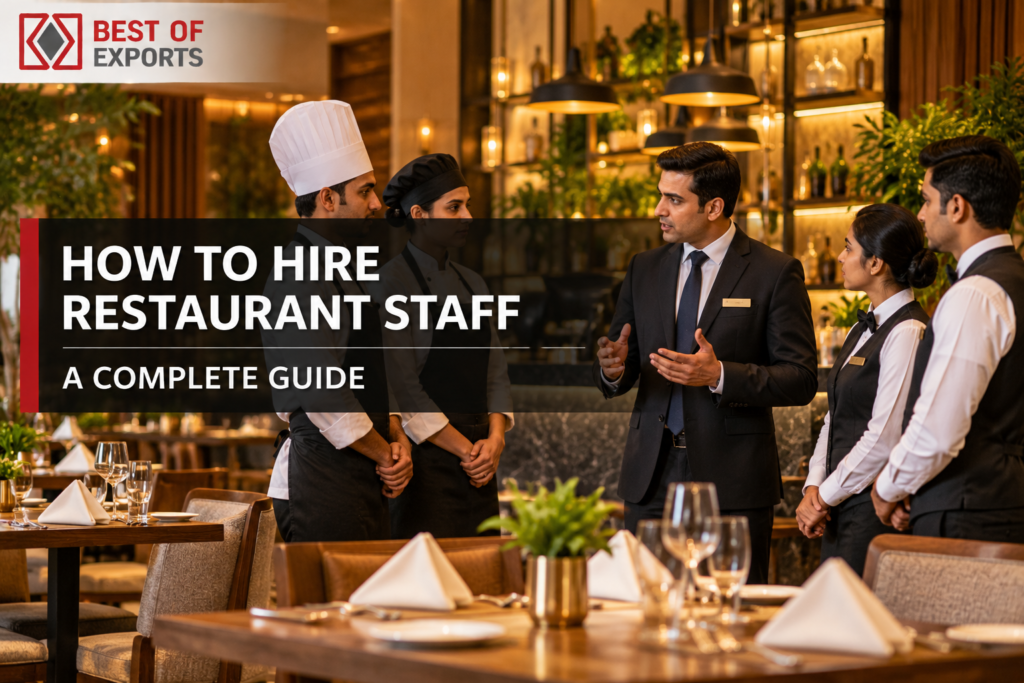
You need a reliable team that can prepare meals, serve customers, maintain cleanliness and keep daily operations running smoothly in order to run your restaurant business successfully. A good restaurant staff hiring can improve the customer satisfaction, build a positive working environment and help your restaurant grow.
But finding suitable employees can be a challenging task. Restaurants need to manage staff shortages, high turnover, busy service hours and different skill requirements. Having a clear restaurant staff hiring process can make it easier to find people who are qualified and reliable for your business.
No matter if you are opening a new restaurant or expanding an existing one, this comprehensive and detailed guide will help you understand how to hire, select and retain the right employees for your hotel business.
1. Identify Your Restaurant’s Staffing Needs
decide which positions you need for your restaurant staff hiring to fill before advertising a vacancy. The number and type of employees will depend on the size of your restaurant, menu, opening hours, service style and expected customer numbers.
For example, a small cafe may need a few kitchen workers and service staff but a large restaurant may need more chefs, kitchen assistants, waiters, cashiers, cleaners, supervisors and a restaurant manager. Think about your busiest hours and the tasks that must be completed during each shift.
You should also consider whether you need full time, part time or temporary employees. Planning for restaurant staff hiring in advance helps you avoid hiring too many people or leaving important duties uncovered. It also gives you a clearer idea of the skills and experience you should look for during recruitment.
2. Create Clear Job Descriptions
prepare a job description for each role once you know which positions you need. This helps the applicants understand what the job involves and allows you to compare candidates fairly. A good job description includes things like the job title, main responsibilities, required skills, experience, working hours and salary range.
For example, a waiter may need to welcome customers, explain menu items, take orders, serve food and handle basic customer requests. You have to be realistic about your requirements. Not every entry level position needs previous restaurant experience.
A willingness to learn, good communication and a responsible attitude may be just as important for some roles. Clear descriptions make restaurant staff hiring more organised because applicants know what to expect before applying for the required position.
Also Read: Is Restaurant Business Profitable in India?
3. Decide Your Budget and Salary Structure
Work out how much you can afford to spend on your staff before you make restaurant staff hiring. Employee costs include more than monthly salaries. You may also need to take account of overtime, training, uniforms, staff meals, applicable contributions and other employment-related expenses which will depend on your business and local requirements.
You can research about the salaries offered by similar restaurants in your area. Pay should reflect the responsibilities, experience and skills required for each position. Make sure your proposed wages comply with applicable minimum wage rules and other employment requirements. You should also explain working hours, weekly holidays, overtime arrangements and any additional benefits clearly.
4. Choose the Right Recruitment Channels
You can now decide where to advertise your vacancies after preparing your desired job descriptions and budget. Using a number of recruitment channels can help you reach a wider range of applicants.
You can advertise through online job portals, local employment groups, local newspapers, social media pages and your restaurant’s website. You can also display a hiring notice at your restaurant, ask existing employees for referrals or contact hospitality training institutes for freshers.
Your local communities and employee referrals may be useful sources of candidates for the entry level roles. You may need to use professional networks or hospitality recruitment agencies for specialist positions like chefs or restaurant managers. Select the channels that match the role you are trying to fill instead of relying on only one source when planning restaurant staff hiring.
5. Screen Applications Carefully
Review the applications against the requirements in your job description once they start arriving. Check for experience, practical skills, availability and evidence that the applicant understands the role they are applying for. For experienced candidates, check their previous responsibilities and the type of establishment where they worked.
Focus on transferable skills such as teamwork, punctuality, communication and willingness to learn for beginners. Now you can shortlist your candidates who meet your requirements. You can conduct a brief phone call, message based conversation to confirm their availability, salary expectations and interest in the position before arranging an interview.
Keep the hiring process fair and consistent. You should avoid making decisions based only on a candidate’s appearance or personal background. Focus on job related qualities and their ability to perform the work for having a professional restaurant staff hiring.
Also Read: How to Open a Restaurant in India?
6. Conduct Structured Interviews
Prepare a few questions before your restaurant staff hiring and ask candidates applying for the same position similar questions. This makes it easier to compare their responses. For example, you could ask:
- How would you handle an unhappy customer?
- How do you manage disagreements with colleagues?
- What does good customer service mean to you?
- How would you respond if you noticed a food safety problem?
For kitchen positions, ask about cooking techniques, food preparation, hygiene and experience with the relevant menu. For supervisory roles, explore leadership, problem solving and shift management skills.
A strong interview process helps you assess whether a candidate can handle the actual demands of the job rather than simply giving impressive answers.
7. Test Practical Skills Where Necessary
Some jobs need practical abilities that cannot be fully assessed just by an interview so a short job related skills assessment can help you make a better decision. For example, a chef may be asked to demonstrate a relevant cooking technique while a barista may demonstrate how they prepare common drinks.
A waiter could be asked to explain a menu item or respond to a sample customer complaint. Any assessment has to be reasonable, safe and directly related to the role. If you ask candidates to perform work rather than a brief demonstration, make sure the arrangement complies with applicable employment rules.
Practical assessments can be particularly helpful when you want to compare candidates with similar levels of experience for restaurant staff hiring.
8. Check References and Relevant Documents
Before finalising your decision, verify the information that matters for the position. Check relevant qualifications or certificates where they are necessary for the role. You should also collect the documents that are required for lawful employment and payroll processing.
Handle personal information carefully and collect only what is reasonably necessary during restaurant staff hiring. Any background checks should be relevant to the position and carried out in accordance with applicable laws.
These checks can help you minimise avoidable hiring mistakes and treat your applicants fairly and professionally.
9. Make a Clear Job Offer
Provide a clear job offer before they start working. Explain the position, salary, joining date, working hours, duties, leave arrangements and other important employment terms in a very clear manner. Provide a written appointment letter or employment agreement where applicable.
Make sure the candidate understands the terms and has an opportunity to ask questions freely. Be honest about the workload, shift timings and expectations. Giving an inaccurate picture of the job may lead to dissatisfaction and early resignation which can negatively affect your restaurant staff hiring in the future.
Also Read: What Is the Standard Restaurant Chair Size? A Complete Buying Guide
10. Train New Employees Properly
Hiring the right people is only the starting. New employees need training to understand your restaurant’s standards, procedures and expectations. You should introduce them to your team, explain their duties and show them how to use the equipment and follow daily routines.
Training should also cover things like hygiene, food safety, customer service, emergency procedures and workplace conduct. Pairing a new employee with an experienced team member can make the learning process far easier.
You should also provide feedback and encourage your employees to ask questions during the first few weeks. A structured training process helps your staff become confident and reduces errors during busy service periods.
11. Focus on Employee Retention
Restaurant staff hiring does not end when an employee joins. Frequent resignations can increase the hiring costs, hinder service and place extra pressure on your remaining team. You can provide fair treatment, predictable schedules where possible, timely payments and a respectful workplace to retain your employees.
Appreciate good performance and offer opportunities to learn new skills or take on additional responsibilities. Listen to the concerns of your employees and address problems before they become serious. Excessive workloads, poor management and unclear expectations can make employees look for other jobs.
A positive working environment makes restaurant staff hiring more effective because you spend less time repeatedly replacing employees and more time building a stable team.
12. Review Your Hiring Process Regularly
You need to review what is working and what needs improvement after hiring a good number of employees. Track how long it takes to fill vacancies, how many candidates attend interviews, how many new employees complete training and how often people leave during their first few months.
If many candidates accept interviews but fail to attend, you may need to improve communication or scheduling. If employees leave quickly, review your salary, training, workload and management practices.
Ask the supervisors for feedback and consider speaking with new employees about their recruitment and joining experience. Small improvements can make future restaurant staff hiring faster and more reliable.
Common Mistakes to Avoid When Hiring Restaurant Staff
Restaurant owners sometimes rush the recruitment process because they urgently need someone to cover a shift but hiring without checking a candidate’s suitability can create bigger problems later. You should avoid unclear job descriptions, unrealistic salary offers and interviews without a plan.
Do not ignore references when they are important and never assume that experience alone guarantees good performance. Another mistake is failing to train your new employees or freshers properly. Even experienced workers need to understand your restaurant’s menu, service standards and internal procedures.
A consistent process helps you make better decisions and gives your candidates a more professional impression of your business during restaurant staff hiring.
Conclusion
Building a reliable restaurant team takes planning, patience and clear communication. Checking references and training new employees, right from identifying staffing needs and writing job descriptions to conducting interviews, every stage contributes to a stronger workforce and a loyal team.
Effective restaurant staff hiring is not only about filling vacant positions as quickly as possible because it is also about finding people who can perform their duties well, work with the team and contribute to a positive guest experience for your hotel business.
You can build a team that supports daily operations and long term business growth by offering fair employment terms, providing proper training and treating employees with respect.
