
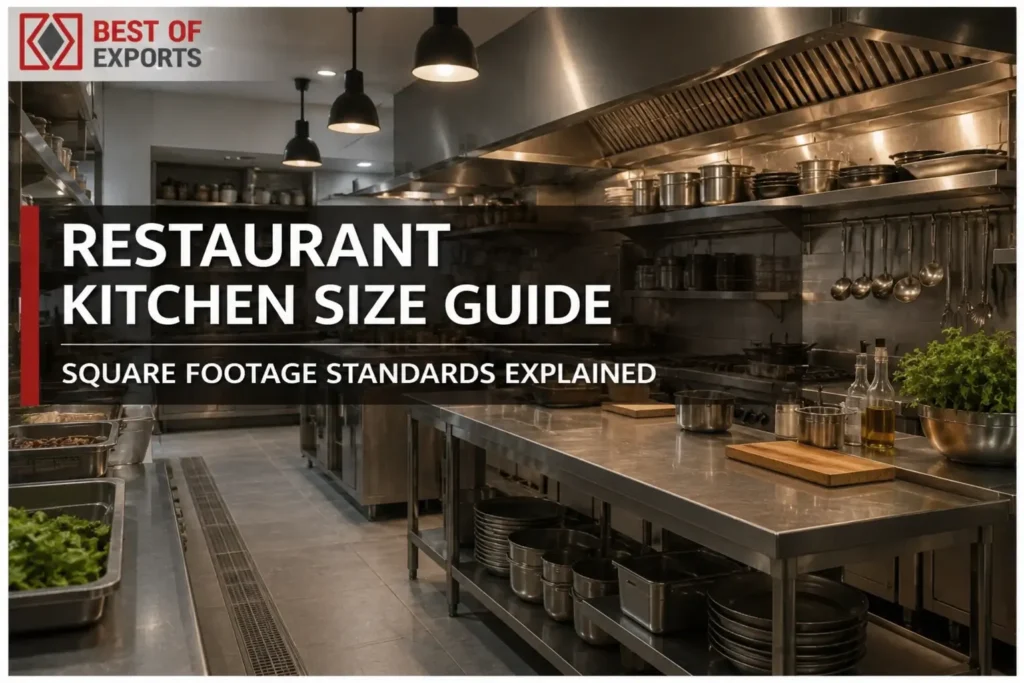
Opening a restaurant is a big dream for many people. However, turning that dream into a successful business needs careful planning. One of the most important decisions during restaurant design is planning the kitchen. The kitchen is the heart of your restaurant. Choosing the right restaurant kitchen size is not only about following guidelines. It is about creating a space where chefs can work safely, comfortably and efficiently.
If the kitchen is too small, staff movement becomes difficult and service slows down. If the kitchen is too large, it wastes valuable dining space and increases rent costs. Finding the right balance is essential.
This detailed guide explains everything you need to know about deciding the correct kitchen square footage. It covers industry standards, layout ratios and practical calculations to help you plan the best setup for your restaurant concept.
Whether you are opening a small café or a luxury fine dining restaurant, understanding kitchen sizing is extremely important for long term success.
Why Restaurant Kitchen Size Matters
Before looking at numbers, it is important to understand why kitchen size affects your business performance. The efficiency of back of house operations directly impacts customer satisfaction. When cooks do not have enough space or cannot easily reach equipment, food preparation becomes slow. Slow service leads to unhappy customers and poor reviews.
Kitchen size also influences your menu planning. A menu that includes different cooking styles such as grilling, frying, baking or plating needs separate workstations. Each activity requires its own area. Trying to operate a complex menu inside a small kitchen creates operational problems.
On the other hand, giving too much space to the kitchen reduces seating capacity in the dining area. Fewer tables mean fewer customers and lower revenue. That is why proper kitchen planning is necessary.
Also Read: How to Start Restaurant Business in India – A Step-By-Step Guide
The Golden Ratio: Kitchen to Dining Space
A common method used in restaurant planning is dividing total space between the kitchen and dining area. Industry professionals usually follow either a 40 to 60 split or a 30 to 70 split.
This means around 30 percent to 40 percent of the total restaurant area is used for the kitchen, storage and preparation zones. The remaining 60 percent to 70 percent is used for dining, waiting areas and restrooms.
These ratios act as starting guidelines only. The perfect restaurant kitchen size depends on your business type. A quick service restaurant or takeaway outlet usually needs less kitchen space because the menu is simple and preparation is fast. A fine dining restaurant normally requires a larger kitchen due to detailed preparation and presentation work.
For example, if your restaurant space measures 2,000 square feet:
- Kitchen and Back of House: 800 square feet
- Dining and Front of House: 1,200 square feet
This example provides a useful baseline but adjustments should always match operational requirements.
Calculating Square Footage per Seat
Another practical way to plan kitchen size is by calculating space according to seating capacity. Once you decide how many guests you want to serve, you can estimate the kitchen area required to support that volume.
A common industry estimate suggests allocating around 5 square feet of kitchen space for every seat. If your restaurant plans to seat 100 customers, your kitchen should be roughly 500 square feet.
This ensures your kitchen production capacity matches customer demand. Having many seats without enough kitchen space results in delayed orders and service issues.
Your total back of house calculation should include:
- Cooking stations
- Preparation areas
- Dishwashing section
- Dry storage rooms
- Cold storage and freezer units
- Staff changing rooms and restrooms
- Manager or chef office space
Key Components of a Commercial Kitchen
Understanding kitchen zones helps you calculate accurate space requirements. Every commercial kitchen includes several functional areas.
The Hot Line
The hot line is the main cooking zone. Equipment such as grills, ovens, ranges and fryers are placed here. The size depends on your menu type. A steakhouse requires larger grilling areas while a pizza restaurant needs bigger ovens.
Aisle space should usually be between 3 to 4 feet so chefs can move safely without collisions, especially while handling hot equipment.
Preparation Area
Food preparation happens before cooking begins. Ingredients are washed, cut and portioned in this section. Adequate counter space and sinks are essential.
Restaurants using fresh ingredients daily require larger preparation areas. A small prep space often becomes the biggest reason for slow kitchen workflow.
Storage Space
Storage planning is often ignored during early design stages. Restaurants need areas for dry ingredients, cleaning materials and extra equipment.
Cold storage units such as walk in refrigerators and freezers also require significant space. Receiving areas should also be included so deliveries can be checked before items are stored.
Dishwashing and Sanitation Area
The dishwashing section plays a vital role in smooth operations. It should be close enough to the dining area for easy access but positioned carefully to reduce noise disturbance.
Industrial dishwashers and three compartment sinks require sufficient working space. If this area is too small, dirty dishes accumulate quickly during busy service hours.
Service and Plating Area
The service pass connects the kitchen with the dining area. Chefs plate dishes here and servers collect orders for guests.
This zone needs enough room for garnishing, organizing tickets and placing heat lamps to keep food warm. A spacious pass area prevents crowding between kitchen staff and servers.
Also Read: Top 10 Restaurant Trends to Watch in 2025
Factors Influencing Your Space Requirements
Restaurants with similar floor sizes may still have completely different kitchen layouts due to several factors.
Menu Complexity
Menus with many items require more equipment, ingredients and preparation stations. A smaller menu allows a more compact kitchen and frees space for additional seating.
Type of Service
Different service styles need different layouts. Buffet restaurants focus on bulk food preparation while à la carte restaurants require detailed plating stations. Fast food kitchens prioritise speed through assembly line setups.
Equipment Selection
Kitchen equipment size directly affects layout planning. Multi functional equipment such as combi ovens can reduce space usage. Under counter refrigerators save walking distance and floor area compared to large upright units.
Scratch Cooking vs Pre Prepared Food
Restaurants preparing everything from raw ingredients need more preparation and storage space. Businesses using partially prepared ingredients can operate efficiently within smaller kitchens.
Tips for Maximising Small Kitchen Spaces
Many restaurants operate in expensive urban locations where space is limited. Smart design choices help maximise smaller kitchens.
- Use Vertical Storage: Install wall mounted shelves and hanging racks to utilise upper wall space effectively.
- Use Mobile Equipment: Equipment placed on wheels allows flexible layout adjustments and easier cleaning.
- Create Multi Purpose Stations: Workstations can serve different functions at different times of the day.
- Simplify the Menu: Remove dishes requiring large equipment that is rarely used.
Also Read: Complete Restaurant Kitchen Equipment List for 2026
Common Mistakes to Avoid
Several planning mistakes can negatively affect kitchen efficiency.
- Poor Ventilation Planning: Ventilation systems occupy large areas. Ignoring hood placement during design can cause expensive modifications later.
- Ignoring Workflow: Kitchen movement should follow a logical sequence: Delivery to Storage to Preparation to Cooking to Plating to Serving to Dishwashing.
- Ignoring Staff Comfort: Kitchen staff work long hours. Proper airflow, rest areas and anti fatigue flooring improve productivity and reduce staff turnover.
- Narrow Aisles: Saving space by reducing aisle width creates safety risks for employees carrying hot or sharp items.
Future-Proofing Your Design
Restaurant concepts often evolve over time. Kitchen layouts should allow flexibility for future upgrades. Avoid permanently fixing equipment unless necessary. Leave room for additional appliances if menu changes occur later.
Modern restaurants also need dedicated packing areas for delivery orders. Separating delivery preparation from dine in service helps maintain smooth operations and prevents congestion.
Conclusion
Choosing the correct restaurant kitchen size requires balancing efficiency with profitability. There is no universal measurement suitable for every restaurant. Decisions should be based on menu design, service style and long term business goals.
Using the 40 to 60 rule as a starting point and adjusting according to operational needs helps create a functional workspace. A well designed kitchen supports staff performance and improves customer satisfaction. When the kitchen operates smoothly, the entire restaurant performs better.
If you are planning a new restaurant, review your layout carefully. Visualise peak service hours and staff movement. If uncertainty remains, consulting a professional kitchen designer can prevent costly mistakes. Investing effort in planning the right restaurant kitchen size today ensures better performance and growth in the future.
Frequently Asked Questions
1. What is the standard ratio for restaurant kitchen size to dining area?
Most restaurants follow a 40 to 60 or 30 to 70 space division. Around 30 percent to 40 percent of total space is used for kitchen and back of house areas while the remaining space is used for dining and customer facilities.
2. How much kitchen space is needed per seat?
Approximately 5 square feet of kitchen area should be allocated for each dining seat. A restaurant with 50 seats should therefore plan around 250 square feet of kitchen space.
3. Does the menu affect kitchen size?
Yes. Complex menus needing multiple cooking techniques require larger kitchens. Simple menus allow smaller and more efficient layouts.
4. What main areas should every commercial kitchen have?
A properly designed commercial kitchen is divided into different working sections so that food preparation and service can run smoothly. The essential areas usually include storage space for ingredients, a preparation section for washing and cutting food, a cooking zone where meals are prepared, a service or plating area where dishes are arranged before serving, and a dishwashing section used for cleaning utensils and equipment.
5. Can a restaurant kitchen be too big?
Yes. Oversized kitchens increase walking distance for staff, raise maintenance costs and reduce dining space which directly affects revenue.
6. How wide should kitchen aisles be?
Kitchen aisles should normally be between 3 to 4 feet wide to allow safe movement and equipment access.
7. How does delivery demand impact kitchen size?
High delivery demand requires additional packing and pickup areas to prevent interference with dine in service operations.
8. What is a ghost kitchen and are size standards different?
A ghost kitchen or cloud kitchen operates only for delivery and has no dining area. In this model, the entire rented space is used for kitchen operations, making layout planning completely different from traditional restaurants.

Pingback: Trademark Class for Restaurant: Step-by-Step Guide 2026
Pingback: GST on Restaurants in India: Rates, Rules & Latest Updates