
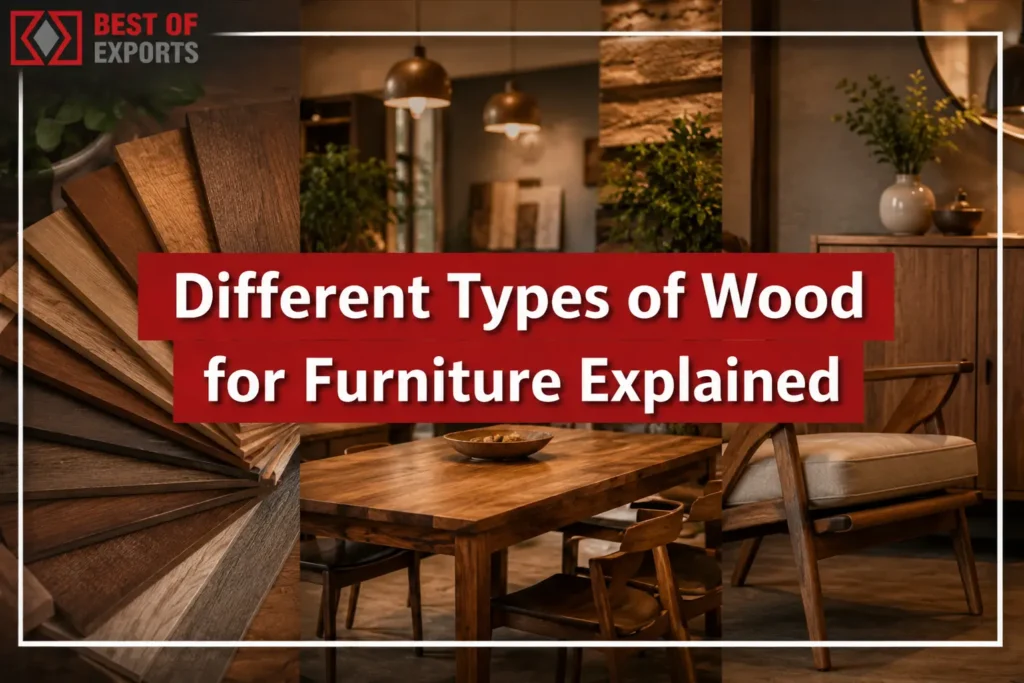
Selecting the right furniture is an important decision, especially in India. It’s not just about how it looks, it’s an investment in your home’s comfort and style. With so many options, it can be hard to know where to start. The most important part of any piece of furniture is the material it is made from. Understanding different types of wood is the first step to choosing furniture you will love for years.
Whether you are furnishing a new flat in a busy city or a large family home, the type of wood you pick affects how durable the furniture is, how it looks and how well it handles India’s varied climate. This guide will explain everything clearly which makes it easy and stress-free to decide.
Understanding Wood: Hardwoods vs. Softwoods
Before looking at specific woods, it helps to know the two main categories: hardwoods and softwoods.
- Hardwoods: These come from trees that lose their leaves in winter, like teak, oak and sheesham. Hardwoods are usually dense, strong and durable which make them ideal for high-quality, long-lasting furniture. Their rich grains and colours also make them very attractive.
- Softwoods: These come from trees with needles and cones, like pine and fir. Softwoods are lighter, less dense and more affordable than hardwoods. They are easier to work with and are perfect for rustic or lighter-style furniture.
Exploring the different types of wood for furniture helps you appreciate the unique qualities each category offers.
Popular Hardwoods for Furniture in India
Hardwoods are often the go-to choice for Indian homes due to their strength and resistance to wear and tear. Let’s look at some of the most common options available.
Teak Wood (Saagwan)
Teak is often called the king of woods. It is extremely durable and has a golden-brown colour that deepens with age.
- Characteristics: Contains natural oils that make it resistant to termites, rot and moisture which makes it perfect for India’s varied climate.
- Pros: Very durable, water-resistant, termite-resistant, low maintenance, ages well.
- Cons: Expensive and heavy.
- Best Uses: Outdoor furniture, dining tables, bed frames, doors, window frames.
- Maintenance: Wipe with a dry cloth, occasionally apply oil to maintain shine.
Sheesham (Indian Rosewood)
Sheesham is strong, durable and known for its rich grain patterns that range from golden brown to deep reddish-brown.
- Characteristics: Hard and tough, does not warp or split easily, polishes well for a smooth and shiny finish.
- Pros: Durable, termite-resistant, decorative grain, more affordable than teak.
- Cons: Heavy, colour can vary between pieces.
- Best Uses: Sofas, cabinets, dining sets, decorative items.
- Maintenance: Dust regularly, avoid direct sunlight, wax polish once or twice a year.
Mango Wood
Mango wood comes from trees that no longer bear fruit which makes it a sustainable option.
- Characteristics: Unique grain with colours from light golden brown to darker shades, sometimes with pink or green hints, strong but less dense than teak or sheesham.
- Pros: Eco-friendly, affordable, lightweight, fairly water-resistant.
- Cons: Can be affected by fungus or insects if not treated properly.
- Best Uses: Coffee tables, chests, bookshelves, TV units.
- Maintenance: Clean with a soft, damp cloth. Avoid harsh chemicals.
Acacia Wood (Babul/Kikar)
Acacia is a fast-growing, durable hardwood that is becoming increasingly popular for furniture in India.
- Characteristics: It is known for its deep, unique grain and rich, warm tones. It’s naturally water-resistant and antibacterial.
- Pros: Very durable, scratch-resistant, affordable and sustainable.
- Cons: Can be sensitive to extreme temperature changes which may cause it to warp.
- Best Uses: Dining tables, benches and flooring. Its durability makes it a smart choice when considering different types of wood for furniture.
- Maintenance: Requires regular oiling to prevent it from drying out and cracking, especially in dry climates.
Oak Wood
Oak is a classic choice and it is loved for its strength and timeless appeal. While not as common as teak or sheesham in traditional Indian furniture as it is widely used in modern and imported designs.
- Characteristics: It has a prominent grain and comes in two main varieties: red oak and white oak. White oak is particularly resistant to moisture and rot.
- Pros: Very strong, durable, and resistant to wear and tear.
- Cons: It is a heavy and expensive wood. It can stain if it comes into contact with water for prolonged periods.
- Best Uses: High-quality cabinetry, dining tables, flooring and desks.
- Maintenance: Keep it dry and clean with a soft cloth. Use coasters to prevent water rings.
Walnut Wood
Walnut is a premium hardwood which is famous for its rich, dark chocolate colour and smooth and straight grain patterns. It adds luxury to any space.
- Characteristics: It is a strong and stable wood that is easy to work with and it allows for intricate carvings and designs.
- Pros: Beautiful colour and grain, very strong and holds its shape well over time.
- Cons: It is one of the most expensive furniture woods. It can be susceptible to scratches and dents.
- Best Uses: High-end furniture like headboards, ornate chairs, cabinets, and veneers for premium surfaces. It’s a standout among the different types of wood for furniture for its elegance.
- Maintenance: Dust regularly and polish with a wax-based furniture polish to enhance its natural beauty.
Common Softwoods & Other Materials
While hardwoods are popular, several other materials are excellent for furniture, each with its own benefits.
Pine Wood
Pine is a lightweight and affordable softwood and it is recognised by its light colour and prominent knots.
- Characteristics: It is easy to work with and takes paint and stain well which makes it very versatile for different styles.
- Pros: Budget-friendly, lightweight and has a rustic charm.
- Cons: Prone to scratches and dents. Not as durable as hardwoods.
- Best Uses: Children’s furniture, rustic-style pieces and starter furniture.
- Maintenance: Requires a protective finish like varnish or lacquer to prevent damage.
Rubberwood
Rubberwood is an eco-friendly hardwood sourced from rubber trees that no longer produce latex. It is often marketed as “plantation hardwood.”
- Characteristics: It has a dense grain and a light, creamy colour which makes it easy to stain.
- Pros: Sustainable, durable for indoor use and relatively inexpensive.
- Cons: Not suitable for outdoor use as it is prone to rot when exposed to moisture. It can warp in very humid conditions.
- Best Uses: Indoor furniture like dining chairs, tables and cabinets. A good budget-friendly option to consider when comparing different types of wood for furniture.
Engineered Wood (Plywood, MDF, HDF)
Engineered wood is made by binding wood fibres, particles or veneers with adhesives to create strong, stable panels.
- Plywood: It is made from thin layers of wood veneer that are glued together. It is strong and resistant to warping. Good quality plywood is an excellent choice for cupboards and modular kitchens.
- Pros: Affordable, stable (doesn’t warp easily), and makes good use of wood by-products.
- Cons: Generally not as strong or long-lasting as solid wood. Can be damaged by excessive moisture, especially MDF.
Bamboo
Though technically a grass, bamboo is often grouped with wood in furniture making due to its strength and durability.
- Characteristics: It’s lightweight but harder than many hardwoods. It gives your home a modern look.
- Pros: Highly sustainable, grows very fast, strong and moisture-resistant.
- Cons: Can be more expensive than some woods. The quality can vary significantly.
- Best Uses: Modern furniture, flooring and bathroom accessories.
Solid Wood vs. Engineered Wood in the Indian Context
Selecting between solid wood and engineered wood is a common dilemma. Here’s a simple comparison to help you decide:
- Durability and Longevity: Solid wood wins here. A well-made teak or sheesham table can last for generations. Engineered wood is durable but has a shorter lifespan and is more prone to water damage and wear.
- Climate Resistance: Solid hardwoods like teak naturally handle India’s humidity and monsoons. Engineered wood, especially MDF, can swell or get damaged if wet. High-quality and water-resistant plywood or HDF works well for kitchens and bathrooms.
- Termite Resistance: Solid woods like teak and sheesham have natural oils that repel termites. Engineered wood is more vulnerable unless chemically treated.
- Sustainability: Engineered wood often uses recycled wood fibres which are eco-friendly but check for low-VOC adhesives. For solid wood, look for FSC-certified or plantation-sourced options to ensure responsible harvesting.
- Cost: Engineered wood is usually more affordable than solid wood which makes it a good choice for modular furniture or tighter budgets.
A Buyer’s Guide to Choosing the Right Wood
Now that you know the different types of wood for furniture, how do you pick the right one? Here are some practical tips.
Choose by Room and Use
Living Room: For high-use items like sofa frames or centre tables, go for durable hardwoods such as teak or sheesham. For TV units or bookshelves, mango wood or good-quality plywood works well.
Dining Room: Dining tables need to be strong. Solid woods like teak, sheesham or acacia are ideal as they resist scratches and heat.
Bedroom: Bed frames made of solid wood give the best stability. For wardrobes and cabinets, marine-grade plywood is a great choice because it resists warping in humid conditions.
Study/Home Office: A solid wood desk in oak or walnut provides a sturdy and stylish workspace. For shelves, MDF or pine can be more budget-friendly.
Check the Finish and Joinery
Finish: A good finish makes furniture look beautiful and protects it. Common finishes include polish, lacquer, and oil. Make sure the finish is smooth, even and free from bubbles or rough spots.
Joinery: This is how the wood pieces are connected. Look for strong joints like dovetail or mortise-and-tenon, especially in drawers and chair legs. Avoid furniture held together mainly with nails or glue.
Warranty and After-Sales Service
Always check the warranty, particularly against manufacturing defects and termites. Good brands also offer reliable after-sales service which is important for long-term satisfaction.
Care and Maintenance Checklist for Indian Climates
To keep your wooden furniture looking its best, follow these simple tips:
- Dust Regularly: Use a soft and lint-free cloth to prevent dust from settling into the grain.
- Protect from Sunlight: Direct sunlight can cause wood to fade and crack. Use curtains or blinds to shield your furniture.
- Control Humidity: During monsoons, use a dehumidifier if possible. In dry weather, a bowl of water in the room can prevent wood from shrinking.
- Clean Spills Immediately: Wipe up any spills right away with a damp cloth then dry the area completely.
- Use Coasters and Mats: Protect surfaces from heat rings and scratches by using coasters, placemats and trivets.
- Periodic Polishing: Apply a suitable wood polish or wax every 6 to 12 months to nourish the wood and restore its shine. This is key for all different types of wood for furniture.
Conclusion
Understanding the different types of wood for furniture helps you make smart choices that fit your budget, style, and needs. From the strong, classic appeal of teak and sheesham to the sustainable charm of mango wood and bamboo, each type of wood has its own advantages. By thinking about durability, climate resistance and maintenance, you can pick furniture that looks great and lasts a long time.
The best choice depends on how you plan to use the furniture and the conditions in your home. Now that you know the basics, you can explore your options with confidence. Shortlist the woods you like, visit a few showrooms to see and touch the furniture and speak with an interior designer or a trusted carpenter.
They can give advice tailored to your home and lifestyle, helping you make a purchase you will enjoy for years. Choosing the right material is the first step to creating a beautifully furnished home.
Frequently Asked Questions (FAQs)
1. What is the most durable type of wood for furniture in India?
Teak (Saagwan) is considered the most durable wood in India. Its density and natural oils make it highly resistant to termites, moisture, and rot which is perfect for Indian climates. Sheesham is another strong and long-lasting option. Both are excellent investments for the long term.
2. Which wood is best for resisting termites?
Teak is naturally termite-resistant due to its oily composition. Sheesham also has good resistance to termites. If you are choosing other woods, especially engineered wood, ensure they have been properly treated with anti-termite chemicals. Always check for a warranty that covers termite infestation. When evaluating different types of wood for furniture, termite resistance is a key factor.
3. I’m on a tight budget. What are some good, affordable wood options?
Mango wood and Rubberwood are affordable hardwood choices. Pine is a budget-friendly softwood, great for rustic or painted furniture. High-quality engineered wood like plywood and MDF is also a good option for wardrobes, cabinets, and modular furniture.
4. Which type of wood is best for a home in a humid, coastal area?
Teak is ideal in humid or coastal areas because its natural oils repel water. Marine-grade plywood is also moisture resistant and works well in kitchens and bathrooms. Avoid untreated MDF as it can swell and get damaged easily.
5. What is the difference between an oil finish and a lacquer finish?
An oil finish soaks into the wood, giving a natural matte look and is easy to repair if scratched. A lacquer finish creates a hard protective layer on the surface, available in matte, satin or glossy. Lacquer offers better protection against spills but is harder to repair if damaged.
6. Is engineered wood a bad choice for furniture?
Not at all! Engineered wood has its own strengths. High-quality plywood or HDF can be very strong, stable and less prone to warping than some solid woods. It’s also a more sustainable and affordable option. The key is to choose the right type for the right purpose, for example, moisture-resistant plywood for the kitchen and ensure it is from a reputable Restaurant Furniture Manufacturers.
7. How can I tell if a piece of furniture is made of real solid wood?
Check the grain pattern. Solid wood has a unique grain that runs through the entire piece. The top, edges, and underside should match. Veneered furniture may have repetitive patterns or visible edges where the veneer is glued. Solid wood pieces are also heavier than engineered alternatives. Learning about different types of wood for furniture helps you spot these details.

Pingback: Types of Engineered Wood: A Complete Guide
Pingback: Is Engineered Wood Good for Beds? Find Out Here