
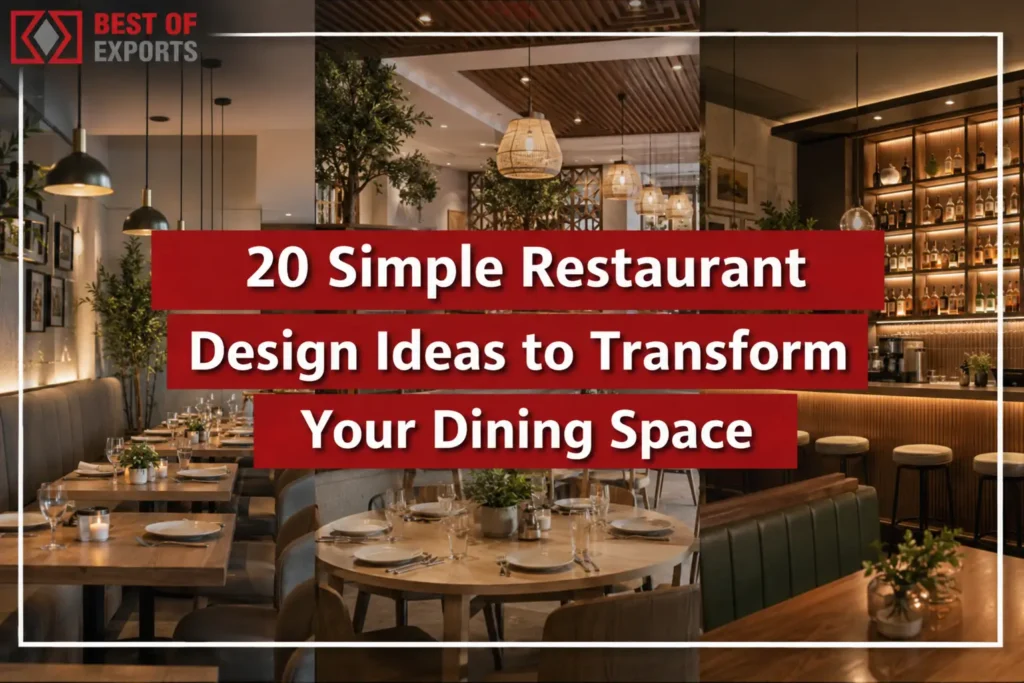
The first thing a customer experiences in your restaurant isn’t the food, it is what they see. Long before the first bite, they take in the ambience. In India’s busy and competitive food scene, whether it’s a trendy café in Bandra or a family diner in Chennai, creating a memorable dining experience is essential.
Good interior design does more than make your space look attractive, it sets the mood, increases comfort and can even shape how customers perceive the quality of your food. The great news is that you don’t need a huge budget to make an impact. A few smart restaurant design ideas can completely transform your space which makes it more inviting, functional and profitable.
In this comprehensive and detailed guide, we’ll explore twenty practical concepts to elevate your restaurant and show how thoughtful design can become your silent but most powerful salesperson.
Crafting the Perfect Ambience: 20 Ideas
Here are twenty practical tips to help you rethink your restaurant’s interior, covering everything from layout and lighting to small decorative touches.
1. Create a Grand Entrance
What it is: The entrance is the first thing your customers notice. It should be welcoming, well-lit and give a clear sense of the experience inside.
Why it matters: A striking entrance sets the tone for the whole visit. It creates anticipation and makes guests feel comfortable and excited to dine.
Practical Tips:
- Budget-Friendly: Use a stylish welcome mat, potted plants (real or good-quality artificial), and keep the area clean. A simple, attractive menu board can also make a great impression.
- Premium Option: Add statement lighting, a small water feature for a calming vibe or a feature wall with your restaurant logo.
- Indian Context: In cities like Delhi or Mumbai where space is limited, use mirrors to make the entryway feel bigger. You can also add traditional Indian touches like jaali screens or hand-painted artwork to give a local flavour right at the door.
2. Harness the Power of Lighting
What it is: Using a mix of lights, ambient, task, and accent to create a space that looks dynamic and sets the right mood.
Why it matters: Lighting shapes the atmosphere. Bright lights suit quick-service restaurants (QSRs), while soft, warm lighting encourages guests to relax and enjoy a longer dining experience in fine-dining settings.
Practical Tips:
- Budget-Friendly: Add dimmer switches to your main lights for flexibility. String lights or fairy lights can create a magical, low-cost glow, perfect for cafes or outdoor seating.
- Premium Option: Consider custom pendant lights above tables, track lighting to highlight artwork or smart lighting systems that adjust colour and brightness.
- Indian Context: Make the most of natural daylight, especially in sunny Indian cities. For evening service, lanterns, diyas or brass lamps can add a warm, traditional charm that customers love.
Lighting is one of the simplest yet most effective ways to shape the mood and enhance the dining experience.
Also Read: Is Restaurant Business Profitable in India? Complete Guide
3. Develop a Cohesive Colour Palette
What it is: Pick 3–5 colours that reflect your brand and the mood you want in your restaurant.
Why it matters: Colours affect emotions. Reds and oranges can stimulate appetite while blues and greens create calm. A consistent colour palette makes your space feel polished and intentional.
Practical Tips:
- Budget-Friendly: A fresh coat of paint is a simple and affordable way to refresh your space. Use a neutral base and add pops of your brand colour through cushions, napkins or a single feature wall.
- Premium Option: Use textured paints, high-quality wallpapers or coloured upholstery on furniture for a more luxurious feel.
- Indian Context: Draw inspiration from India’s vibrant palette, the spice markets of Jaipur or the backwaters of Kerala. Earthy tones like terracotta, ochre and deep greens feel authentic and welcoming.
4. Maximise Your Layout and Flow
What it is: Arrange tables, chairs and service areas thoughtfully to make the most of your space for both guests and staff.
Why it matters: A well-planned layout prevents cramped spaces, maintains privacy and allows staff to move efficiently. It improves service speed and enhances the dining experience.
Practical Tips:
- Budget-Friendly: Mix seating types (booths, two-tops, four-tops) to suit different group sizes. Keep pathways clear and intuitive.
- Premium Option: Use custom-built booths or partitions. Different flooring materials can visually separate zones such as the bar from the main dining area.
- Indian Context: With smaller rental spaces, verticality helps. Use high shelves for storage or décor. Lightweight, movable furniture allows easy reconfiguration for family gatherings or events, which is common in India.
5. Choose Smart and Stylish Furniture
What it is: Select tables and chairs that are comfortable, durable, and match your restaurant’s concept.
Why it matters: Uncomfortable seating can push guests out early while the style of furniture sets the tone for your brand and price point.
Practical Tips:
- Budget-Friendly: Refurbish old furniture with fresh paint or new upholstery. Source unique pieces from local artisans.
- Premium Option: Invest in custom-designed furniture using high-quality materials like solid wood, marble or leather.
- Indian Context: India has a rich furniture heritage. Materials like cane, bamboo, sheesham or teak wood work beautifully. Upholstery with block prints or ikat patterns adds a distinct ethnic chic.
6. Incorporate Greenery and Plants
What it is: Bring in live plants, hanging planters or even a vertical green wall.
Why it matters: Plants improve air quality, add natural beauty and create a calming atmosphere. They make your space feel fresh and lively.
Practical Tips:
- Budget-Friendly: Choose low-maintenance plants like snake plants, pothos or succulents. Even a few well-placed plants can make a noticeable difference.
- Premium Option: Install a self-watering living wall or place large indoor trees as statement pieces.
- Indian Context: Pick plants that thrive in your local climate to reduce care needs. Terracotta or ceramic pots add a traditional touch. For special occasions, temporary decor like hanging marigold garlands or banana leaves can add cultural flair.
7. Create a Feature Wall
What it is: Designate one wall as a focal point using a bold colour, texture, large artwork or mural.
Why it matters: A feature wall draws attention, adds visual interest and creates a perfect “Instagrammable” backdrop.
Practical Tips:
- Budget-Friendly: Paint one wall in a contrasting colour, arrange a gallery of framed photos or prints or use stencils for patterns.
- Premium Option: Commission a hand-painted mural from a local artist or use materials like exposed brick, reclaimed wood or designer wallpaper.
- Indian Context: Feature traditional Indian art such as Kalamkari, Warli or vintage Bollywood posters. This adds cultural charm and makes your restaurant memorable.
Also Read: Complete Restaurant Kitchen Equipment List
8. Pay Attention to Acoustics
What it is: Control sound levels so your restaurant is lively but not too noisy.
Why it matters: Excessive noise can make conversation hard and create a stressful environment. Good acoustics improve the dining experience.
Practical Tips:
- Budget-Friendly: Use curtains, rugs, upholstered chairs or bookshelves to absorb sound.
- Premium Option: Install acoustic panels disguised as art, sound-absorbing ceiling tiles or moss walls.
- Indian Context: In busy cities, street noise can be an issue. Heavy curtains or double-glazed windows help. A buzzing restaurant is often seen positively in India, so aim for energetic but comfortable noise levels.
9. Use Mirrors to Enhance Space
What it is: Place mirrors strategically to create the illusion of depth and reflect light.
Why it matters: Mirrors make small spaces feel larger, brighter and more open.
Practical Tips:
- Budget-Friendly: Use a single large framed mirror or a collection of smaller mirrors to create interest.
- Premium Option: Cover an entire wall with mirrors or use antique-finished tiles for a luxurious effect.
- Indian Context: Frames with Indian craftsmanship like carved wood or inlaid mother-of-pearl, combine functionality with local artistry.
10. Showcase Local Art and Craft
What it is: Decorate walls and spaces with artworks, pottery or textiles from local artisans.
Why it matters: Supporting local talent gives your restaurant a unique character and creates conversation starters for guests.
Practical Tips:
- Budget-Friendly: Collaborate with local artists to display their work on a rotating basis, or frame interesting textiles.
- Premium Option: Commission a prominent sculpture or art piece from a well-known regional artist.
- Indian Context: Use Tanjore paintings, Pichwai art, Dhokra metal work or hand-woven Kashmiri carpets. This adds authenticity and charm which will make your restaurant stand out.
11. Design an Appealing Bar Area
What it is: Make the bar more than just a service counter; turn it into a visually attractive focal point of the restaurant.
Why it matters: A well-designed bar can draw in customers looking for drinks, increase revenue and serve as a social hub.
Practical Tips:
- Budget-Friendly: Use creative shelving for bottles, under-counter LED strips for ambiance and comfortable stools.
- Premium Option: High-end countertops like granite or quartz, custom backbar with integrated lighting and mirrors.
- Indian Context: Incorporate brass or copper elements for warmth. Highlight local spirits or craft beers and reflect that theme in your bar design.
12. Focus on Signage and Wayfinding
What it is: Exterior signs and internal directional signs guiding customers to restrooms, exits or different areas.
Why it matters: Clear, well-designed signage enhances customer experience and reinforces your brand aesthetic.
Practical Tips:
- Budget-Friendly: Stencilled lettering, vinyl decals, or simple A-frame boards outside.
- Premium Option: Neon or backlit exterior signs, engraved brass or wooden internal signs.
- Indian Context: Use bilingual signage (English + local language) and incorporate regional motifs or scripts subtly in the design.
Also Read: How to Start Restaurant Business in India – A Step-By-Step Guide
13. Curate a Unique Table Setting
What it is: Choosing crockery, cutlery, glassware and table linens thoughtfully.
Why it matters: The table setting is a guest’s closest interaction with your design, unique settings enhance food presentation and overall experience.
Practical Tips:
- Budget-Friendly: Skip tablecloths for interesting placemats, simple earthenware and a single flower in a small vase.
- Premium Option: Custom ceramic plates, high-quality cutlery and crystal glassware.
- Indian Context: Use Kansa (bronze) utensils, banana leaves or traditional hand-painted tableware for a regional touch.
14. Ensure Restrooms Are Impeccable
What it is: Treating the restroom design with the same care and attention as the main dining area.
Why it matters: Poorly maintained restrooms can ruin a dining experience, while clean, well-designed ones impress customers.
Practical Tips:
- Budget-Friendly: Spotlessly clean, well-lit, with quality soap and mirrors.
- Premium Option: Designer tiles, stylish sinks and taps, wallpaper and soft background music.
- Indian Context: Proper ventilation is critical. Touchless faucets, soap dispensers and a small tray with mints or lotion enhance hygiene and comfort.
15. Create an Outdoor Oasis
What it is: Using available outdoor space for seating, like patios, balconies or rooftops.
Why it matters: Outdoor seating attracts customers, especially in pleasant weather and increases capacity and revenue.
Practical Tips:
- Budget-Friendly: Durable, weather-resistant furniture, string lights, umbrellas and potted plants.
- Premium Option: Retractable awnings, outdoor heaters, misting fans and lounge-style furniture.
- Indian Context: Shade is crucial due to strong sun. Use pergolas, umbrellas or tensile structures. Mosquito control via citronella candles or repellents is essential.
16. Incorporate Your Branding
What it is: Integrating your logo, brand colours, and story into the physical space.
Why it matters: Reinforces brand identity and creates a cohesive, memorable experience.
Practical Tips:
- Budget-Friendly: Print logos on napkins or coasters, use brand colours in decor.
- Premium Option: Custom neon signs, etched glassware or partitions.
- Indian Context: Reflect your regional or culinary heritage in decor, art and staff uniforms.
17. Think About Ventilation
What it is: Ensuring fresh air circulation and effective removal of kitchen smoke and odors.
Why it matters: A stuffy or smoky environment is unpleasant; good ventilation improves comfort and staff productivity.
Practical Tips:
- Budget-Friendly: Use cross-ventilation via windows and doors, stylish ceiling or wall fans.
- Premium Option: High-quality HVAC systems with strong kitchen extraction hoods.
- Indian Context: Air conditioning is often necessary in hot, humid climates. Position units carefully to avoid direct cold drafts on diners.
18. Use Sustainable and Reclaimed Materials
What it is: Incorporating eco-friendly materials like reclaimed wood, recycled metal or bamboo.
Why it matters: Sustainability resonates with customers, reduces environmental impact and can create a rustic, textured aesthetic.
Practical Tips:
- Budget-Friendly: Source wood from old furniture, demolished buildings or shipping pallets. Use recycled glass for decor.
- Premium Option: Custom furniture from high-quality reclaimed teak, sustainable local stone for flooring.
- Indian Context: Bamboo, jute, and reclaimed wood from old havelis or boats are locally available and cost-effective.
19. Integrate Open Kitchens
What it is: Making the kitchen partially or fully visible to diners.
Why it matters: Adds theatre, builds trust and creates an energetic atmosphere.
Practical Tips:
- Budget-Friendly: A small pass-through window showing some kitchen activity.
- Premium Option: Fully open kitchen with a chef’s counter for guest interaction.
- Indian Context: Works well with visually appealing Indian cuisines like tandoori or dosa. Strong extraction systems are essential to manage smoke and odors.
Also Read: Top 10 Restaurant Trends to Watch in 2026
20. Don’t Forget the Music
What it is: Curating playlists that match your concept and audience.
Why it matters: Music subtly sets the mood and affects how long guests stay and how they perceive the environment.
Practical Tips:
- Budget-Friendly: Use streaming services with pre-made playlists, keep volume at background levels.
- Premium Option: Hire a music curator, or host live music nights with local artists.
- Indian Context: Play classical, fusion, or retro Bollywood tunes depending on your theme. Music should not overpower and complement the dining experience.
Conclusion
Transforming your restaurant doesn’t have to be overwhelming or costly. As we’ve explored, meaningful improvements often come from a combination of well-thought-out, simple restaurant design ideas. By paying attention to essentials such as lighting, colour schemes, layout and sensory touches, you can craft a space that is not only visually appealing but also tells your brand story and enhances the overall dining experience.
The aim is to create a holistic environment where the ambience complements the food and leaves a lasting impression on every guest. These twenty restaurant design ideas serve as a practical roadmap, helping you elevate your space with purposeful, impactful choices. Now that you have these simple restaurant design ideas at your fingertips, it’s time to put them into action. Take a fresh look at your space and identify one or two elements you can enhance this month.
Save this guide for reference and share it with fellow restaurateurs seeking inspiration. For a more comprehensive transformation or a new restaurant project, consider consulting a professional interior designer who can help translate your vision into reality and manage the execution process seamlessly.
Frequently Asked Questions (FAQs)
1. What is a realistic budget for renovating a small restaurant in India?
A budget can vary dramatically, but here’s a rough guide for a small (approx. 1000 sq. ft.) restaurant. A cosmetic refresh (paint, lighting, decor updates) could range from ₹2 lakhs to ₹5 lakhs. A moderate renovation (including furniture changes, flooring and feature walls) might fall between ₹8 lakhs and ₹15 lakhs. A full gut renovation with structural changes and high-end finishes could easily exceed ₹25 to ₹30 lakhs. Always budget an extra 15 to 20% for unexpected costs.
2. How can I plan a layout for a very small restaurant space?
Efficiency is key in compact spaces. Use smaller square or rectangular two-seater tables that can be combined for larger groups. Bench or booth seating along walls saves floor space. Maximise vertical space for storage and decor, and incorporate mirrors to make the space feel larger. Keep pathways clear and consider an open kitchen to reduce the sense of confinement. Implementing these simple restaurant design ideas is especially effective for smaller venues.
3. What are the best lighting levels for different types of restaurants?
Lighting levels, measured in Lux, should vary. For a Quick Service Restaurant (QSR) or cafe, brighter lighting (around 200-500 Lux) is ideal to encourage faster turnover. For a casual family dining restaurant, a comfortable, moderate level (100-200 Lux) works well. In a fine-dining or romantic restaurant, low, warm lighting (50-100 Lux) creates intimacy with task lighting focused on each table. Dimmers are essential for flexibility.
4. What are some low-maintenance materials for flooring and furniture?
For high-traffic restaurant floors, vitrified tiles, polished concrete or high-quality laminate are excellent choices as they are durable and easy to clean. Avoid porous materials like unsealed natural stone. For furniture, choose tables with laminate, granite or metal tops. For chairs, go for metal, solid wood, or commercial-grade fabric/leatherette that can be easily wiped down. Prioritising these simple restaurant design ideas will save on long-term operational costs.
5. How can I source local materials and decor in India?
Sourcing locally is a great way to add authenticity. For furniture, explore local workshops in cities known for woodworking, like Jodhpur or Saharanpur. For textiles, look to regions famous for their craft—Jaipur for block prints, Gujarat for embroidery. For art and pottery, visit local art fairs, craft bazaars like Dilli Haat, or connect with art colleges. Building relationships with local artisans can result in unique, custom pieces for your space.
6. What are the basic compliance checks I need to consider for my design?
While you should consult a professional, key compliance points include ensuring proper fire safety (clear exits, fire extinguishers, smoke detectors), adequate kitchen ventilation (as per local municipal norms), and proper electrical wiring. Restrooms must have proper sanitation and accessibility provisions. Signage should be clear and if you have an outdoor area, you’ll need the appropriate licenses. A designer or architect can help ensure your plans meet all local building codes.
7. How long does a typical restaurant renovation take?
The timeline depends on the scale. A simple cosmetic refresh can be done in 1-2 weeks, often by working overnight to avoid shutting down. A moderate renovation might take 3-6 weeks. A complete, ground-up renovation for a new space can take anywhere from 3 to 6 months, including design, permissions, and construction. Proper planning is the key to minimizing downtime. Many simple restaurant design ideas can be implemented quickly with minimal disruption.

Pingback: How to Improve Restaurant Sales: 21 Tips & Strategies
Pingback: Standard Size of Chair in Restaurant: Measurements Must Know
Pingback: 10 Popular Types of Menu in Restaurant (With Examples)
Pingback: 10 Essential Hotel Cleaning Chemicals You Must Use