
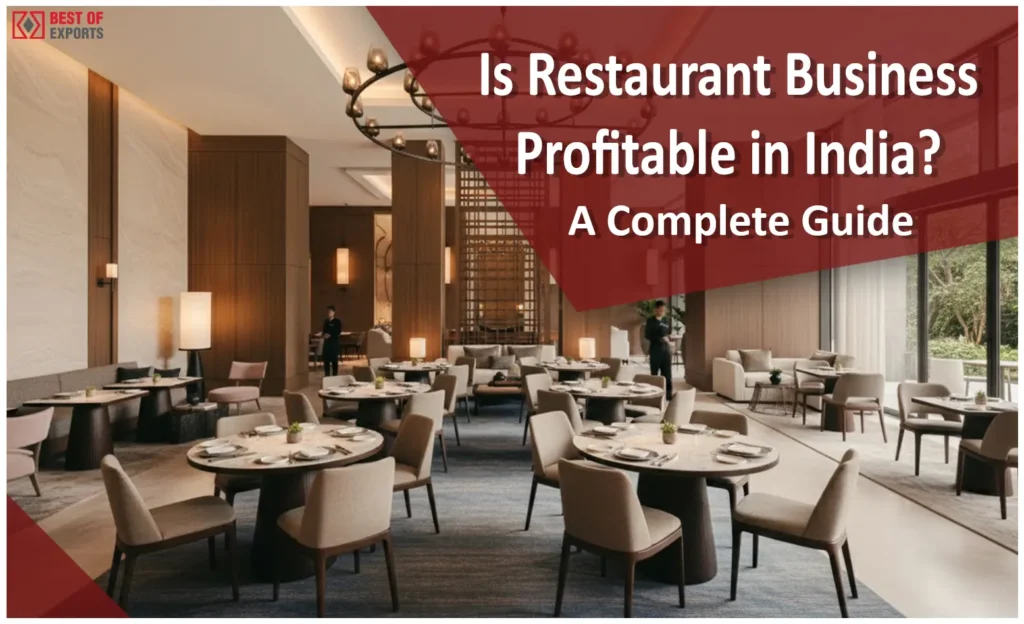
Owning a restaurant, serving delicious food and creating memorable experiences is a dream for many Indians. But beyond the excitement, one big question remains: is the restaurant business profitable in India? While the food and beverage industry looks glamorous, it comes with its challenges.
With the right strategy, understanding of the market, and careful execution, the answer can definitely be yes. India’s food service industry is growing rapidly, thanks to a young population, rising incomes and increasing urbanisation.
This makes it a great time to start new and innovative food ventures. But profitability doesn’t happen automatically, it comes from careful planning, from shaping your concept to managing daily operations.
In this comprehensive and detailed guide, we will explore whether a restaurant can be profitable in India by looking at costs, revenue streams and the key factors that separate successful restaurants from those that struggle.
The Indian Food Service Market: A 2026 Outlook
The first step in figuring out if a restaurant business can be profitable in India is understanding the market. By 2026, the industry is expected to keep growing strongly. Opportunities are no longer limited to big cities: Tier-2 and Tier-3 towns are seeing rising demand, opening doors for new restaurant ventures.
Key Market Trends for 2026
- Health and Wellness: More people are paying attention to what they eat. Restaurants offering organic, vegan, gluten-free or locally sourced ingredients will stand out.
- Technology Integration: Digital tools like QR code menus, online payments, and smart kitchen management systems are essential. Technology now helps in both efficiency and customer satisfaction.
- Rise of Delivery and Cloud Kitchens: The convenience of home delivery will continues to shape customer behaviour. Delivery-focused or cloud kitchen models are becoming increasingly important.
- Hyper-Local Cuisine: While international foods are popular, people are also appreciating regional Indian dishes and authentic flavours more than ever.
- Sustainable Practices: Customers are looking for eco-friendly packaging, waste reduction and ethical sourcing when choosing where to eat.
Considering these trends is very important when asking, “is restaurant business profitable in India?” Aligning your concept with these shifts can significantly improve your chances of success.
Also Read: How to Start Restaurant Business in India – A Step-By-Step Guide
Choosing Your Business Model
The type of restaurant you open directly impacts your investment, operational complexity and profit potential. Let’s examine the most common models.
Quick Service Restaurant (QSR)
QSRs or fast-food outlets are focusing on speed and affordability. They typically have a limited menu and a streamlined process.
- Pros: Lower initial investment, high customer volume and simpler operations.
- Cons: Lower profit margins per order, intense competition.
Casual Dining
Casual dining restaurants offer you a relaxed atmosphere with a full-service experience. The menu is more extensive than a QSR and the average bill value is higher.
- Pros: Higher profit margins, opportunity to build a loyal customer base.
- Cons: Higher operational costs (staff, larger space) with more complex management.
Fine Dining
Fine dining establishments provide you an upscale experience with premium food, exquisite service and a luxurious feel.
- Pros: Very high profit margins and strong brand image.
- Cons: Extremely high initial and operational costs, requires a highly skilled team, and targets a niche market.
Cloud Kitchen (or Ghost Kitchen)
Cloud kitchens are delivery-only restaurants that have no physical dining space. They operate through a commercial kitchen and rely entirely on online orders. This model helps answer if a restaurant business is profitable in India with lower startup costs.
- Pros: Drastically lower rent and initial setup costs, flexibility to run multiple brands from one kitchen.
- Cons: Heavy reliance on food aggregators (Swiggy, Zomato), high commissions and challenges in brand building without a physical presence.
Also Read: Top 10 Restaurant Trends to Watch in 2025
The Financial Breakdown: Costs and Revenue
To truly understand if a restaurant business is profitable in India, you must master the numbers. Your profitability hinges on managing costs and maximising revenue.
Capital Expenditure (CapEx)
This is the one-time investment required to set up your restaurant.
- Property Deposit/Rent Advance: A significant upfront cost, especially in prime locations.
- Interior and Renovation: Includes civil work, furniture, lighting and decor.
- Kitchen Equipment: Ovens, refrigerators, stoves, exhaust systems and other essential tools.
- Licensing and Permits: Fees for securing all necessary government approvals.
- Initial Inventory: The first stock of raw materials and ingredients.
- Technology Setup: Point of Sale (POS) system, CCTV and kitchen display systems.
Operational Expenditure (OpEx)
These are the recurring monthly costs to run the business.
- Food Cost: The cost of raw materials. Usually, this should be 25 to 35% of your menu price.
- Labour Cost: Salaries for chefs, managers, service staff and cleaning crew. Aim for 20 to 30% of revenue.
- Rent: A major fixed cost.
- Utilities: Electricity, water, gas and internet bills.
- Marketing & Sales: Costs for advertising, social media and aggregator commissions.
- Maintenance and Repairs: Unexpected equipment breakdowns or facility issues.
Revenue Levers: Maximising Your Income
- Average Bill Value (ABV): The average amount a customer spends per order. Increase this through upselling, combos, and strategic menu pricing.
- Table Turns: How many times a table is occupied by a new set of customers during a service period. Faster service and efficient management can increase this.
- Delivery and Takeaway Mix: A healthy mix can add a significant revenue stream, especially during non-peak dining hours.
Also Read: Complete Restaurant Kitchen Equipment List for 2026
Key Pillars of a Profitable Restaurant
1. Location
Choosing the right location is critical. Consider these:
- Visibility and Footfall: Is your restaurant easy to see and in a busy area?
- Target Audience Demographics: Does the local population match your ideal customers?
- Competition: Who are your nearby competitors, and what are they offering?
- Accessibility and Parking: Can customers reach your restaurant easily, and is there convenient parking?
2. Licensing and Compliance in India
Navigating the legal landscape is a critical step. While it can be complex, it’s non-negotiable. Key licenses include:
- FSSAI License: Mandatory for all food businesses.
- GST Registration: For tax compliance.
- Shop and Establishment Act License: Required for all commercial establishments.
- Health/Trade License: Issued by the local municipal authority.
- Fire and Safety License: To ensure the safety of your premises.
- Music License: If you plan to play recorded music.
Starting this process early is crucial. The question of whether a restaurant business is profitable in India can be impacted by delays and fines from non-compliance.
3. Staffing and Training
Your team is the heart of your restaurant. Hire for attitude and train for skill. A well-trained, motivated staff provides excellent service which leads to repeat customers. Invest in regular training on your menu, service standards, and hygiene protocols.
4. Menu Engineering
Your menu is your most important marketing tool. It should be designed for profitability.
- Analyse Profitability and Popularity: Classify dishes into Stars (high profit, high popularity), Plowhorses (low profit, high popularity), Puzzles (high profit, low popularity), and Dogs (low profit, low popularity).
- Strategic Pricing: Use psychological pricing techniques and control food costs.
Effective menu engineering directly contributes to a profitable restaurant business in India.
5. Marketing and Branding
You can have the best food but if no one knows about you, your tables will be empty.
- Digital Marketing: Build a strong presence on social media like Instagram and Facebook. Run targeted ads and engage with your audience.
- Influencer Marketing: Collaborate with food bloggers and influencers to generate buzz.
- Zomato/Swiggy Optimisation: Keep listings updated with high-quality photos and menus, and participate in promotions.
- Local Marketing: Flyers, newspaper ads and community events can attract local customers.
A consistent marketing effort is key to ensuring a restaurant business is profitable in India.
6. The Technology Stack
Modern restaurants rely on technology to run smoothly:
- Point of Sale (POS) System: Manages orders, billing, and reporting.
- Inventory Management Software: Tracks stock and controls food costs.
- Customer Relationship Management (CRM): Manages customer data and loyalty programmes.
- Online Ordering System: A direct platform on your website helps save on aggregator commissions.
Also Read: The Ultimate Guide to the Cost of Opening a Restaurant
Risks, Profitability Benchmarks, and Financing
Every business has risks. The key is to anticipate and mitigate them. Knowing what to expect financially and how to fund your venture will help you decide if a restaurant business is profitable in India for you.
Common Risks and Mitigation
- High Competition: Stand out with a unique concept, excellent service and consistent quality.
- Rising Food Costs: Work with multiple suppliers and design your menu to absorb small price changes.
- Staff Turnover: Foster a positive work culture, offer fair pay and provide growth opportunities.
- Inconsistent Cash Flow: Keep a cash reserve to cover 3 to 6 months of operating expenses.
Profitability Benchmarks and Timelines
- Net Profit Margin: A well-run restaurant can aim for 10 to 20% net profit.
- Break-Even Point: Most new restaurants take 6 to 18 months to reach a point where revenue equals costs.
- Return on Investment (ROI): It usually takes 2 to 5 years to recover your initial investment.
Patience and financial discipline are paramount. The journey to determine if a restaurant business is profitable in India requires a long-term perspective.
Financing and Scaling Your Business
- Bootstrapping: Using your own savings gives full control but carries personal financial risk.
- Bank Loans: Loans are available for restaurants but require a strong business plan and collateral.
- Investors: Angel investors or venture capitalists may invest in unique and scalable concepts in exchange for equity.
Once your first outlet is stable and profitable, you can consider scaling your business. Options include opening more company-owned outlets or expanding through franchising your brand.
Conclusion: Is Restaurant Business Profitable in India?
The short answer is yes—but with an important point: it is profitable for those who approach it as a serious business, not just a passion project. In 2026, the Indian market offers huge potential but success depends on a combination of factors: a unique concept, a great location, efficient operations, smart marketing and a memorable customer experience.
Profitability doesn’t happen by chance; it comes from careful planning and consistent execution. How well you manage costs and drive revenue will determine whether your restaurant becomes a thriving business, making the question, “is restaurant business profitable in India?” one that you must answer with a clear strategy.
If you are ready to turn your culinary dream into a profitable reality, start by creating a detailed business plan. Cover everything from your menu concept to five-year financial projections.
For guidance on navigating the complexities of the Indian food industry or for a step-by-step checklist to kickstart your journey, don’t hesitate to seek expert advice. With the right planning and dedication, you can build a successful and profitable restaurant story in India.
Frequently Asked Questions (FAQs)
1. What is the average cost to open a restaurant in India?
The cost varies widely based on the model and location. A small cloud kitchen might be set up for ₹5-10 lakhs. A QSR or small café in a Tier-2 city could cost ₹15-30 lakhs. A casual dining restaurant in a metro city can easily require an investment of ₹50 lakhs to over ₹1 crore. This initial cost is a major factor when considering if a restaurant business is profitable in India.
2. How long does it take to break even in the restaurant business?
The break-even timeline depends on factors like initial investment, rent, operational efficiency and marketing effectiveness. A well-run restaurant typically aims to break even within 6 to 18 months. Fine dining establishments might take longer due to their high upfront and operational costs.
3. What are the most important licenses needed to run a restaurant?
The most critical licenses are the FSSAI License, GST Registration, Health/Trade License from the local municipality and the Shop and Establishment Act License. Depending on your operations, you may also need a Fire Safety Certificate, a Music License and an Environmental Clearance. Securing these is a non-negotiable part of making your restaurant business profitable in India.
4. Is a cloud kitchen more profitable than a dine-in restaurant?
A cloud kitchen has a lower initial investment and lower operational overheads (no front-of-house staff, lower rent), which can lead to higher profit margins per order. However, they are heavily dependent on third-party aggregators who charge commissions of 20-30%, eating into profits. A dine-in restaurant has higher revenue potential through alcohol sales and a better ability to build a strong brand identity. Both models can be profitable if executed well.
5. How much is the GST on restaurant food in India?
Currently, the GST for food services in restaurants is 5% without Input Tax Credit (ITC). This applies to both standalone restaurants and those located within hotels (where the room tariff is less than ₹7,500). Understanding tax implications is crucial when calculating if a restaurant business is profitable in India.
6. What is a good food cost percentage for a restaurant?
A healthy food cost percentage for most restaurants in India is between 25% and 35%. This means the cost of ingredients for a dish should be no more than 25-35% of its selling price on the menu. Fine dining might have a slightly higher food cost while QSRs aim for the lower end of this range.
7. How do I measure marketing ROI for my restaurant?
To measure ROI, track the source of your customers. For digital campaigns, use unique promo codes or track clicks and conversions. For offline marketing, ask customers how they heard about you. Compare the increase in sales or new customers from a specific campaign to the cost of that campaign. For example, if a ₹10,000 influencer campaign brings in ₹50,000 of new sales, your return is significant. This helps you decide where to invest your marketing budget to ensure your restaurant business is profitable in India.

Pingback: 20 Simple Restaurant Design Ideas for Modern Spaces
Pingback: How to Choose the Perfect Restaurant Flooring Design
Pingback: What Are the Ideal Restaurant Chair Dimensions? (Full Guide)
Pingback: Top 11 Veg Restaurant Franchise Options in India
Pingback: Standard Size of Chair in Restaurant: Measurements Must Know
Pingback: Top 15 Creative Restaurant Wall Decor Ideas for 2026
Pingback: Best Restaurant Wall Colors to Attract More Customers
Pingback: How Much Swiggy Charges from Restaurants in India?
Pingback: Ultimate Restaurant Checklist for Opening a New Restaurant
Pingback: GST on Restaurants in India: Rates, Rules & Latest Updates
Pingback: 10 Essential Hotel Cleaning Chemicals You Must Use
Pingback: Hotel Linen Size Guide: Standard Bedding Sizes for Hotels
Pingback: 25 Creative Restaurant Opening Ideas to Attract Customers